De flesta kommersiella löpband är konstruerade för ett enda syfte: att gå och springa framåt med varierande hastighet och lutning. Detta är fullt tillräckligt för ett allmänt konditionsträningsområde. Men det innebär att viktiga kliniska behov och behov inom prestationsinriktad träning förblir otillgodosedda – den postoperativa patienten som inte kan belasta med full kroppsvikt, idrottaren som återuppbygger explosiv drivmekanik efter en skada, den äldre personen som behöver extremt låg hastighet och kontinuerligt stöd, samt den neurologiska patienten som måste lära sig gångmönster på nytt. Var och en av dessa användare behöver något som ett standardlöpband inte kan tillhandahålla på ett säkert eller effektivt sätt.
Den Power Strider XC2 har utformats just för dessa behov. I den här artikeln redogörs för de fem typer av kommersiella anläggningar där Power Strider XC2 erbjuder funktioner som konventionella löpband inte kan mäta sig med – och för varje anläggningstyp förklaras vilka specifika egenskaper hos XC2 som gör den till det bästa valet ur driftssynpunkt.
Power Strider XC2 för kommersiellt bruk: Tekniska egenskaper i korthet
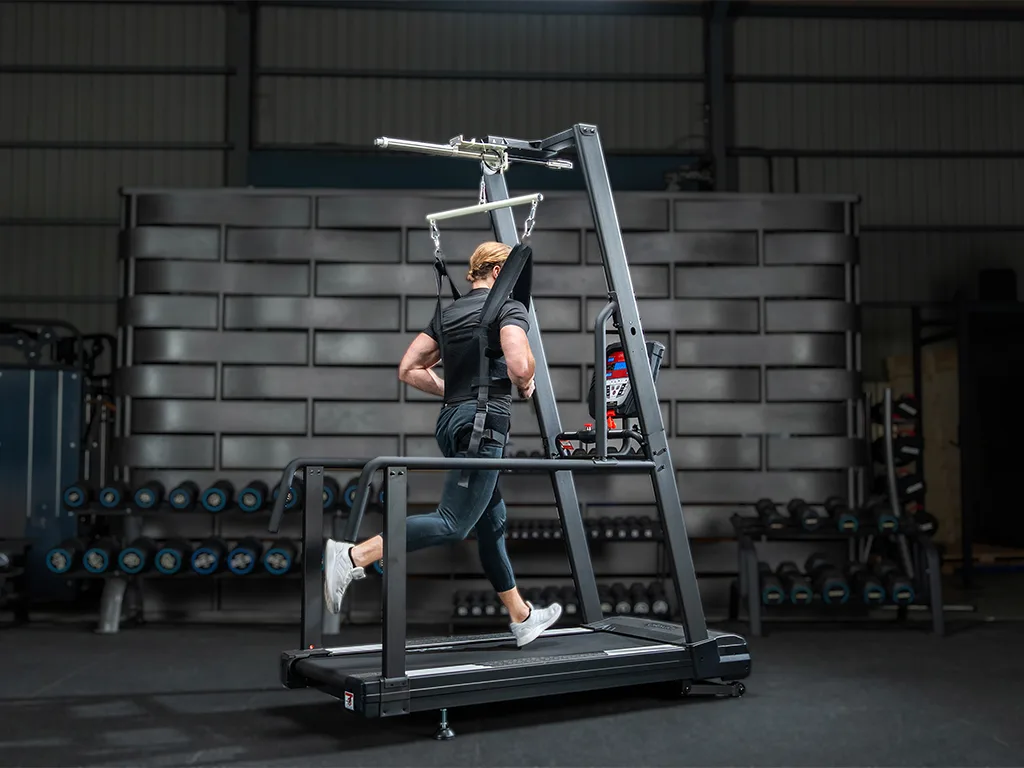
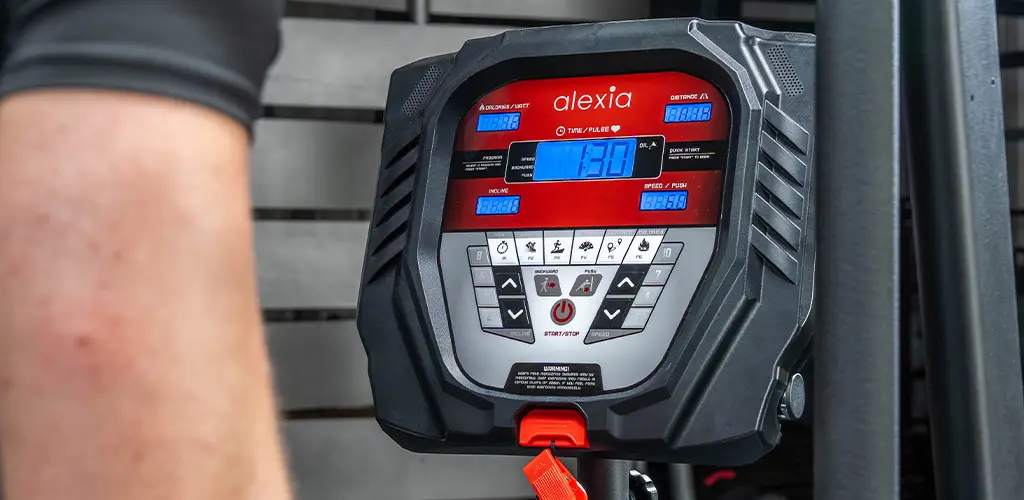
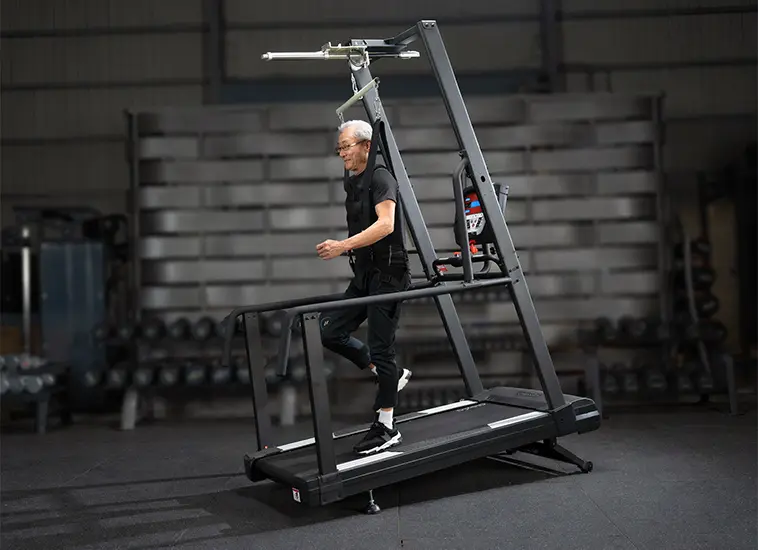
Innan man kopplar XC2 till specifika anläggningstyper är det bra att förstå vad som skiljer den från ett vanligt kommersiellt löpband på specifikationsnivå. XC2 är inte ett löpband med extra funktioner – det är en i grunden annorlunda plattform för rörelseträning. De viktigaste särdragen är dess drivsystem med flera lägen (löpning framåt, excentrisk träning bakåt och simulering av släde-push), dess pneumatiska upphängningssele som ger en viktavlastning på upp till 35 kg samt dess extremt låga starthastighet på 0,1 km/h. Specifikationstabellen nedan sammanfattar hela plattformen.
| Specifikation | Power Strider XC2 | Standardmodell av löpband för kommersiellt bruk (typisk) |
|---|---|---|
| Träningslägen | Löpning framåt, excentrisk träning bakåt, simulering av slädepress | Endast framåtgående körning |
| Hastighetsintervall | 0,1–20 km/h (framåt och bakåt) | 0,5–20+ km/h (endast framåt) |
| Lägsta starthastighet | 0,1 km/h — avsedd för inledning av långsam gång | Vanligtvis 0,5–1,0 km/h |
| Upphängning med kroppsvikt | Pneumatisk sel: viktminskning på 0–35 kg | Ej tillgängligt |
| Lutningsintervall | 0–6° (ca 10,51 TP3T) | Vanligtvis 0–15% |
| Bältets bredd | 56 cm — passar för ett brett gångsätt | Vanligtvis 48–55 cm |
| Säkerhetssystem | Dubbelt skydd: nödstopp + avtagbar säkerhetsklämma | Endast nödstopp |
| Tillgång för vårdpersonal | Öppen arkitektur + justerbar skärm med flera axlar | Standardkapsling; fastmonterad skärm |
| Maximal användarvikt | 150 kg | Vanligtvis 135–180 kg beroende på modell |
| Pulsmätning | Kontaktbaserade sensorer på de främre handtagen | Standard på de flesta kommersiella modellerna |
Anläggningstyp 1: Sjukgymnastik- och rehabiliteringskliniker
Rehabiliteringskliniker är den miljö som Power Strider XC2:s konstruktion är mest direkt anpassad för. De tre egenskaper som utmärker dess värde i detta sammanhang är det pneumatiska fjädringssystemet, den extremt låga starthastigheten och konstruktionen med öppen sida som underlättar vårdpersonalens åtkomst.
Träning på löpband med kroppsviktsstöd är en etablerad rehabiliteringsmetod med en omfattande evidensbas. En systematisk översikt som publicerades i Heliyon (PMC) fann att träning på ett löpband med tyngdkraftsreducering ger betydande kliniska effekter när det gäller smärtlindring, gångförmåga och funktionell återhämtning vid olika muskuloskeletala tillstånd – däribland återhämtning efter operation av akillessenan, knäartros och frakturer i nedre extremiteterna. Möjligheten att exakt reglera hur stor andel av kroppsvikten som patienten belastas med gör att rehabiliteringsprogrammen kan påbörjas tidigare i återhämtningsprocessen än vad gång med full belastning tillåter.
XC2:s pneumatiska system erbjuder en justerbar fjädring på 0–35 kg med steglös reglering. För en patient som väger 70 kg innebär en fjädring på 35 kg en minskning av kroppsvikten med 50% – vilket är tillräckligt för att påbörja gångträning direkt efter en knä- eller höftoperation. Starthastigheten på 0,1 km/h är lika avgörande: den möjliggör en smidig och kontrollerad rörelseinledning för patienter med kraftigt nedsatt funktion i nedre extremiteterna, där till och med en vanlig löpbands lägsta hastighet på 0,5 km/h skulle innebära en oacceptabel fallrisk.
Den öppna ramen och den justerbara skärmen med flera axlar är anpassade efter de praktiska kraven vid klinisk övervakning. Sjukgymnaster måste kunna placera sig bredvid eller bakom patienten under gångträning, övervaka rörelsekvaliteten i realtid och snabbt ingripa vid behov. XC2:s konstruktion är utformad utifrån detta arbetsflöde, istället för att utgå från att en enskild användare ska hantera maskinen på egen hand.
Anläggningstyp 2: Elitidrottscenter
I den andra änden av användarspektrumet kräver elitidrottsanläggningar XC2 för en helt annan uppsättning funktioner: excentrisk träning bakåt, simulering av släde-push och kontrollerad sprintmekanik vid höga hastigheter. Det här är prestationskrav som vanliga löpband inte klarar av.
Att gå och springa baklänges – så kallad retro-rörelse – aktiverar quadriceps, sätesmusklerna och höftböjarna i excentriska belastningsmönster som inte kan återskapas vid framåtriktad gång. Forskning publicerad i Artroskopi, idrottsmedicin och rehabilitering (Wiley) bekräftar att träning på ett antigravitationslöpband med kroppsviktstöd ger tydliga biomekaniska anpassningar — däribland ökad steglängd, förändrade profiler för markreaktionskrafter och förändrade muskelaktiveringsmönster — som är användbara för målinriktad rehabilitering efter skador och korrigering av styrkeasymmetri hos tävlingsidrottare. XC2:s bakåtlöpningsläge (0,1–20 km/h) erbjuder en kontrollerad miljö för denna träning, där hastighet och fjädring kan justeras utan att träningspasset avbryts.
Simuleringsläget för slädepressning åtgärdar en av de mest träningsrelevanta begränsningarna hos inomhusanläggningar: oförmågan att utföra tungt horisontellt drivarbete med motstånd utan en särskild konstgräsbana. Slädepress utvecklar acceleration vid första steget, kraft i den bakre muskelkedjan och förmågan att generera markkontaktkraft – egenskaper som är centrala för prestationen inom lagsporter, sprintgrenar och kampsporter. XC2 erbjuder denna träningsstimulans inomhus, i en kontrollerad miljö, året runt.
Anläggningstyp 3: Anläggningar för seniorers träning och hälsosamt åldrande
Träningscenter för äldre och program för hälsosamt åldrande ställer särskilda krav på utrustningen: extremt låga hastigheter för användare med långsam och ostadig gång; breda stödkonstruktioner för användare med nedsatt balans; säkerhetssystem som reagerar omedelbart på oväntade rörelser; samt fjädringsalternativ som minskar belastningen på lederna för användare med artros eller tillstånd efter benbrott. XC2 uppfyller alla fyra kraven.
Den American College of Sports Medicine (ACSM) rekommenderar att träningsprogram för äldre vuxna ska omfatta balansövningar, gångträning och gradvis ökande belastningsövningar vid sidan av traditionell konditions- och styrketräning. XC2:s lägsta hastighet på 0,1 km/h gör det möjligt att påbörja gångträning på löpband med äldre användare som inte på ett säkert sätt kan använda vanliga kommersiella löpband. Bandbredden på 56 cm anpassar sig till den bredare gångstilen som är vanlig hos äldre vuxna och ger en psykologisk trygghet genom en stabil och rymlig yta.
Det pneumatiska fjädringssystemet är särskilt lämpligt för äldre användare som lider av artros, som återhämtar sig efter frakturer i nedre extremiteterna eller som genomgår rehabilitering efter höft- eller knäprotesoperation – tillstånd som alla är vanligt förekommande bland äldre. Genom att minska den effektiva kroppsvikten under gång möjliggör XC2 konditions- och gångträning vid intensiteter som annars skulle vara kontraindicerade på grund av ledvärk eller belastningsbegränsningar.
Anläggningstyp 4: Avdelningar för neurologisk och postoperativ rehabilitering på sjukhus
Rehabiliteringsavdelningar på sjukhus – som tar emot strokepatienter, patienter som återhämtar sig efter ryggmärgsskador, patienter som rehabiliteras efter traumatiska hjärnskador samt patienter som återhämtar sig efter ortopediska operationer – ställer de strängaste kraven på säkerhet och tillgänglighet jämfört med alla andra tränings- eller rehabiliteringsmiljöer. XC2:s dubbla säkerhetssystem (nödstopp plus avtagbar säkerhetsklämma), öppen konstruktion på sidorna och extremt låg starthastighet uppfyller direkt de kliniska kraven i dessa miljöer.
Patienter inom neurologisk rehabilitering uppvisar ofta asymmetriska gångmönster, nedsatt proprioception och varierande stabilitet från ögonblick till ögonblick. XC2:s avtagbara säkerhetsklämma stoppar löpbandet omedelbart om användaren tappar balansen – en funktion som skiljer den från vanliga löpband och uppfyller kliniska säkerhetsstandarder för patienter med hög fallrisk. De förlängda handstödarna ger stöd på båda sidor, vilket är lämpligt för patienter som inte säkert kan släppa taget under gångträning.
Möjligheten att träna i 0,1 km/h med en kroppsviktminskning på 35 kg skapar en träningsmiljö som överbryggar klyftan mellan gångträning vid parallella stänger och självständig gång på marken – en övergångsfas som vanliga löpband inte kan hantera på ett säkert sätt. Detta gör XC2 till ett värdefullt tillskott till sjukhusens rehabiliteringsavdelningar, där patientens väg från sängläge till självständig förflyttning kräver ett kontrollerat mellansteg.
Anläggningstyp 5: Exklusiva kommersiella gym med zoner för funktionell träning
Stora kommersiella gym i premiumklassen som har inrättat särskilda zoner för prestations- eller funktionell träning – skilda från den vanliga konditionsavdelningen – kan använda XC2 som en central del av utrustningen som visar hur seriöst de tar sitt prestationsprogram. Till skillnad från vanliga löpband som smälter in i en rad av identiska maskiner skapar XC2:s utseende och möjlighet till flera träningslägen en unik träningsstation.
I detta sammanhang riktar sig XC2 till medlemmar som återhämtar sig efter skador i nedre extremiteterna (som har nytta av fjädringssystemet och träningsläget bakåt), seriösa fritidsidrottare som tränar sprintteknik och acceleration (som drar nytta av släde-tryckläget och höghastighetslöpning framåt) samt prestationsinriktade medlemmar som behöver utrustning som är lätt att använda för tränare (som drar nytta av den öppna sidostrukturen och den justerbara skärmen). Denna kombination av funktioner för flera olika medlemsprofiler är ovanlig inom en och samma utrustningskategori och gör XC2 till en resurs med hög utnyttjandegrad i funktionella träningszoner där varierade träningsprogram är det främsta värdeerbjudandet för medlemmarna.
Den utrustning för funktionell träning Inom denna kategori har investeringarna i högklassiga kommersiella gym ökat stadigt under det senaste decenniet. Anläggningar som har inrättat zoner för funktionell träning vid sidan av sina konventionella träningsutrustning av professionell kvalitet Gymmet är den naturliga miljön för XC2.
Anpassning mellan anläggningar och funktioner: En sammanfattande referens
I tabellen nedan visas vilka funktioner hos Power Strider XC2 som ger störst praktiskt värde för respektive anläggningstyp i det sammanhanget.
| Anläggningstyp | De viktigaste funktionerna i XC2 som använts | Kliniska/operativa resultat |
|---|---|---|
| Klinik för fysioterapi och rehabilitering | Luftfjädring (0–35 kg), starthastighet 0,1 km/h, åtkomst från öppen sida | Tidigare inledning av gångrörelsen; minskad belastning på lederna; säker träning med stöd av vårdpersonal |
| Elitidrottscenter | Bakåtläge (0,1–20 km/h), simulering av släde som skjuts framåt, hela hastighetsområdet framåt | Excentrisk träning; utveckling av accelerationsförmåga; konditionsträning inför återgång till idrott |
| Träning för äldre och hälsosamt åldrande | Starthastighet 0,1 km/h, 56 cm löpband, förlängda handräcken, fjädring | Säker gångträning för nybörjare; minskad fallrisk; belastningshantering för lederna |
| Neurologisk rehabilitering/postoperativ rehabilitering på sjukhus | Dubbelt säkerhetssystem, 0,1 km/h, säkerhetssele, öppen konstruktion | Övergång mellan parallellstänger och gång på marken; högsta möjliga säkerhet |
| Exklusivt kommersiellt gym (funktionell zon) | Multifunktionsdrivning, slädeframdrivning, fjädring, öppen ram med tillgång för tränare | Prestandadifferentiering; utrustning för flera populationer med hög utnyttjandegrad |
Vad man bör utvärdera före upphandlingen
Innan man beställer en Power Strider XC2 till en anläggning bör man ta hänsyn till flera praktiska aspekter. För det första, golvyta och takhöjd: XC2:s upphängningssel kräver tillräckligt utrymme under taket för att selens konstruktion ska rymmas ovanför löpytan, och den öppna konstruktionen kräver utrymme på minst en sida för att vårdpersonal eller tränare ska kunna placera sig. För det andra, specifikationer för strömförsörjningen: kommersiella löpband med flera lägen har andra strömkrav än vanliga konditionsmaskiner, och anläggningens elinfrastruktur bör kontrolleras innan beställning sker. För det tredje, personalutbildning: XC2:s funktioner av klinisk kvalitet ger maximalt värde när driftspersonalen är utbildad i kalibrering av upphängningen, växling mellan lägen samt protokoll för placering av patienter eller kunder. Vårt team kan stödja anläggningsoperatörer genom hela specifikations- och införandeprocessen, från den första förfrågan till installationen.
Vanliga frågor och svar
Vad skiljer Power Strider XC2 från ett vanligt löpband för kommersiellt bruk?
XC2 har tre olika lägen som inte finns på vanliga löpband: löpning framåt, excentrisk träning bakåt och simulering av släde-push. Den har dessutom en integrerad sel med pneumatisk fjädring som minskar kroppsvikten med upp till 35 kg, startar vid 0,1 km/h för användare som inte tål vanliga starthastigheter och har en öppen konstruktion på sidorna som är särskilt utformad för att underlätta åtkomst för vårdpersonal. Dessa funktioner gör den till en helt annorlunda plattform, snarare än ett löpband med stegvisa uppgraderingar.
Är det pneumatiska fjädringssystemet lämpligt för rehabilitering efter operation?
Ja — löpbandsträning med kroppsviktsstöd har en väl etablerad evidensbas för rehabilitering efter operationer, bland annat vid korsbandsrekonstruktion, höftledsplastik, akillessensreparation och återhämtning efter knäartros. XC2:s fjädring på 0–35 kg med steglös reglering gör det möjligt att exakt justera andelen kroppsvikt som stöds i takt med att patienten går igenom rehabiliteringsfaserna, från hög fjädring i den tidiga postoperativa fasen till full belastning när återhämtningen tillåter det.
Kan XC2 användas för prestationsinriktad träning, eller är den främst ett rehabiliteringsverktyg?
XC2 är utformad för båda dessa sammanhang. För idrottsprestationer erbjuder dess bakåtriktade träningsläge en excentrisk belastning av quadriceps och höftböjarna som inte går att uppnå på löpband som endast går framåt, och dess simuleringsläge för släde-tryck utvecklar förmågan att generera horisontell drivkraft för accelerationsträning. För elitidrottare som återhämtar sig efter skador i nedre extremiteterna möjliggör kombinationen av prestationsinriktade träningslägen och kroppsviktupphängning ett progressivt återgångsprogram till idrotten med hjälp av en enda maskin.
Hur stor golvyta kräver Power Strider XC2?
XC2 kräver standardutrymme för löpband samt fritt utrymme på minst en sida för att vårdpersonal eller tränare ska kunna komma åt under övervakad träning. Det krävs dessutom extra takhöjd för upphängningsselens konstruktion. Vi rekommenderar att du bekräftar de specifika måttkraven med vårt team som en del av processen för att fastställa anläggningens specifikationer, eftersom installationskraven kan variera beroende på vilken upphängningskonfiguration som väljs.
Är Power Strider XC2 lämplig för ett gym på ett hotell eller inom besöksnäringen?
XC2 är specialutvecklad för klinisk rehabilitering, idrottsträning och träning för äldre – inte för allmän användning i hotellgym. Dess funktioner av klinisk kvalitet, träningslägen och krav på övervakning är mest relevanta på anläggningar där professionell personal övervakar användningen av utrustningen. För konditionsavdelningar på hotell eller i allmänna kommersiella gym är vanliga kommersiella löpband det lämpliga valet. XC2:s värde kommer till sin rätt i sammanhang där dess olika träningslägen och fjädringsfunktioner aktivt programmeras och coachas.
Slutsats
Power Strider XC2:s användningsområden inom kommersiella anläggningar är mycket breda, just eftersom dess funktioner tillgodoser tränings- och rehabiliteringsbehov som vanliga löpband inte kan uppfylla. För fysioterapikliniker möjliggör dess kroppsviktupphängning och extremt låga hastighet en tidigare rehabilitering. För idrottscenter erbjuder dess bakåtlöpnings- och släde-trycklägen träningsstimuli som inte finns någon annanstans. För träningsprogram för äldre erbjuder den en säker konstruktion och ett brett stödunderlag. För neurologiska avdelningar och avdelningar för postoperativ vård på sjukhus säkerställer det dubbla säkerhetssystemet och åtkomsten från öppen sida att kraven för klinisk användning uppfylls. För exklusiva kommersiella gym skapar dess mångsidiga funktionalitet en prestandaresurs med hög utnyttjandegrad.
Om du överväger att skaffa en Power Strider XC2 till din anläggning och vill diskutera tekniska specifikationer, installationskrav och priser, kontakta vårt team för ett detaljerat förslag.