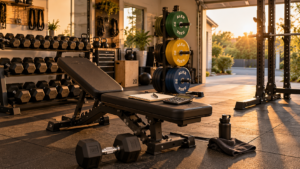
The category error that produces the most consistently poor equipment decisions in commercial fitness is applying general commercial gym procurement logic to a sports performance facility — or vice versa. These two facility types serve fundamentally different populations with different training demands, programming models, and success metrics. The equipment configurations that serve them well are different in ways that go beyond specification: they reflect different philosophies about what training is for, who is being served, and what the facility’s operational environment should feel and function like.
This article identifies the five most consequential equipment setup differences between sports performance facilities and general commercial gyms, and maps each difference to the procurement decisions it should drive. Whether you are building one type of facility, renovating an existing facility of one type to become the other, or designing a hybrid that must serve both populations, these differences define the specification framework.
Defining the Two Facility Types
A sports performance facility serves athletes — defined broadly as individuals whose fitness goals are the development of specific athletic capacities: power, speed, agility, strength endurance, or sport-specific movement quality. The facility’s users may be professional or collegiate athletes, competitive recreational athletes, team sport participants, or serious individuals whose training is explicitly performance-oriented. The facility is typically coached or supervised, with programming that is periodised and goal-directed rather than open and self-directed.
A general commercial gym serves the broad adult public — individuals whose primary goals are general health improvement, weight management, fitness maintenance, and accessible strength and cardiovascular conditioning. The user demographic spans beginners through intermediate levels with highly varied goals, experience, and technique confidence. The facility is typically self-directed, with staff present for safety and assistance rather than to deliver prescribed programming to all members simultaneously.
As noted in commercial gym layout guidance from Hamilton Home Fitness, a sports performance facility specifically requires turf lanes, racks, sled work capability, mobility areas, and clear coaching visibility — a setup that is structurally distinct from the cardio, strength machine, and general free weight zones that characterise general commercial gym layouts. These are not the same space with different equipment; they reflect different operational models.
Difference 1: Free Weight and Platform Configuration
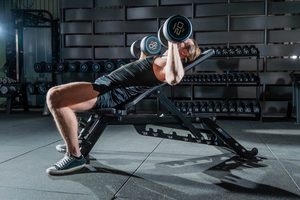
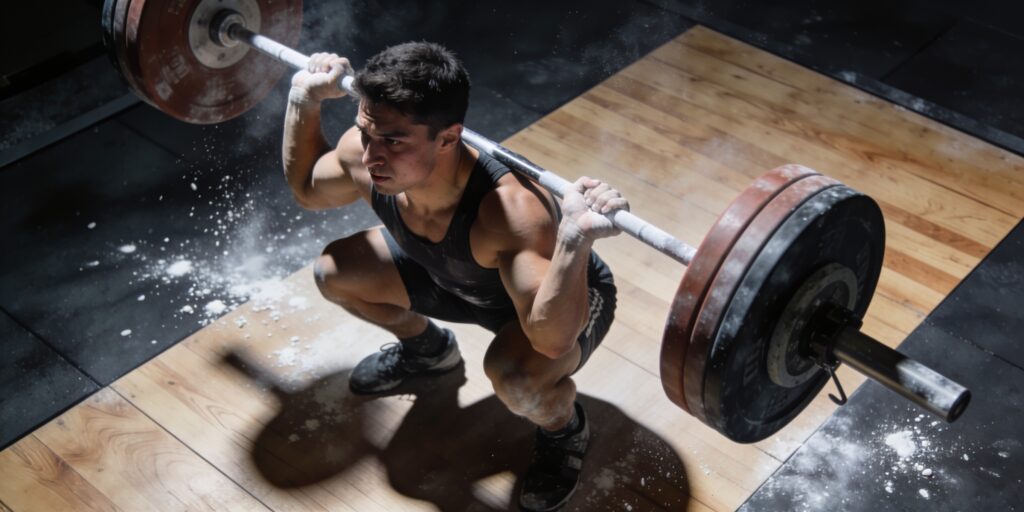
The most fundamental equipment difference between sports performance facilities and general commercial gyms is the role of the barbell. In a sports performance facility, the barbell — specifically the Olympic barbell on a lifting platform with bumper plates — is the primary training implement. The facility is organised around it. Platform space, ceiling clearance above platforms, coaching sightlines to platforms, and the proximity of plate storage to platforms are primary layout variables. The number of platforms per facility is often the most important single equipment capacity figure.
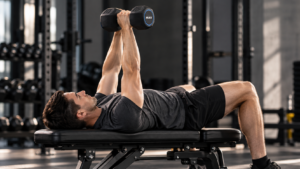
In a general commercial gym, the barbell is one tool among many — present in a squat rack area and a bench press zone, but not the organising principle of the floor. The barbell area typically receives less floor allocation than the cardio zone and less investment than the selectorised machine area. For many general commercial gym members, the barbell is an aspirational implement rather than a primary training tool.
The equipment specification implications are significant. Sports performance facilities need competition-specification or near-competition-specification barbells: 28mm men’s bars or 25mm women’s bars, needle-bearing rotation for Olympic lifting movements, and calibrated or bumper plates appropriate for repeated drops. Free weight training equipment for sports performance should be specified to competition standards. General commercial gyms need durable multipurpose barbells — typically 28.5mm hybrid bars — that can sustain high-frequency use by members of varied technique, paired with rubber-coated or TPU-coated plates that protect flooring and tolerate imperfect handling.
Difference 2: Cardio Equipment — Essential vs. Deliberately Absent
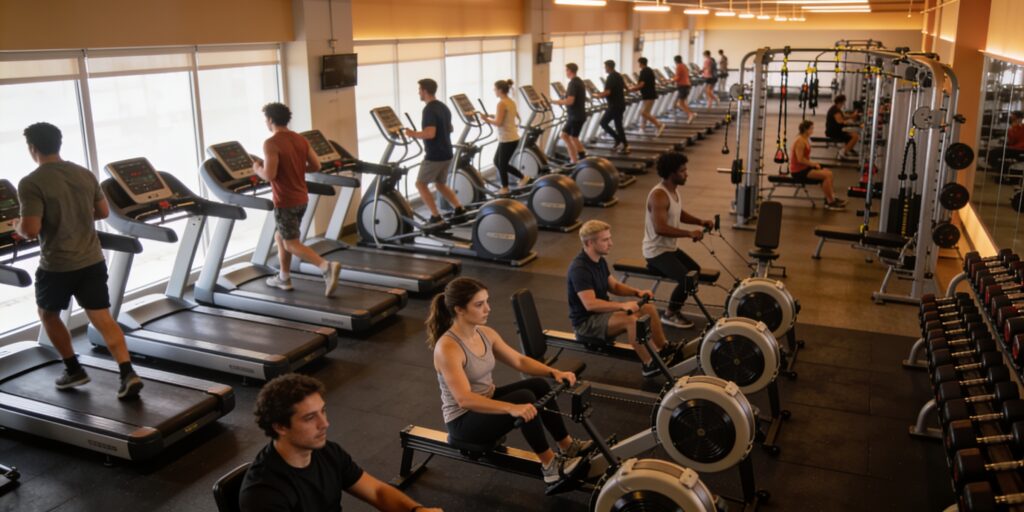
In a general commercial gym, cardio equipment — treadmills, stationary bikes, ellipticals, rowing ergometers — typically represents the largest single equipment category by floor area, unit count, and often by capital expenditure. Many members whose primary goal is cardiovascular fitness and weight management use these machines for the majority of their gym visit. A commercial gym without a well-stocked cardio floor is not commercially viable for its target population.
In a sports performance facility, dedicated cardio equipment of the traditional commercial gym type is either absent or minimal. Athletic conditioning in a sports performance context is accomplished through barbell complexes, sled pushes, battle ropes, loaded carries, interval sprints on turf, and other implements that produce cardiovascular adaptation as a byproduct of sport-relevant movement. A row of treadmills in a sports performance facility represents floor space that would more effectively serve the population as additional platform space, turf lanes, or functional training area.
This difference is the source of the clearest visual distinction between the two facility types. A room full of cardio machines immediately identifies a general commercial gym. A room full of platforms and racks with no visible cardio equipment identifies a sports performance facility. Operators planning either type should resist the temptation to hedge by including elements of the other: cardio machines in a performance facility suggest unclear positioning, while the absence of cardio machines in a general commercial gym excludes a large portion of the target membership.
Difference 3: Selectorised Machines — Accessibility vs. Specificity
Selectorised strength machines — weight stack machines with pin-loaded resistance and guided movement paths — are the backbone of the general commercial gym’s strength offering. They are accessible to beginners with no strength training background, safe for self-directed use without a spotter, and provide a low barrier to entry for the exercise patterns (pressing, pulling, leg extension, leg curl) that constitute most members’ strength training. The American College of Sports Medicine (ACSM) specifically notes the value of guided resistance equipment for populations beginning supervised exercise programmes — a point directly relevant to general commercial gym demographics.
In sports performance facilities, selectorised machines play a secondary role at most. For athletes who can perform compound barbell movements with good technique, guided selectorised machines provide a limited training stimulus compared to free weight alternatives — the fixed movement paths do not engage stabiliser muscles, do not develop the co-ordination required in sport, and do not develop the movement patterns that transfer to athletic performance. Selectorised machines in a sports performance facility are typically limited to accessory work (isolation exercises for injury prevention, rehabilitation from injury, or specific hypertrophy programming) rather than central to the facility’s training model.
Difference 4: Functional Training Zone Design
Both facility types may include a functional training zone, but the design and equipment specification differ substantially.
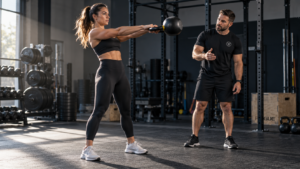
In a general commercial gym, the functional training zone serves as a complement to the machine-based strength floor — providing variety, group fitness class support, and conditioning programming that the selectorised machine area cannot address. The zone typically includes cable machines with multiple attachment points, kettlebells, medicine balls, resistance bands, and a limited selection of functional accessories. Functional training equipment at this scale supports programming variety for the general membership.
In a sports performance facility, the functional training zone is not an accessory area — it is a primary training zone. Turf lanes accommodate sprint work, loaded carries, and sled pushing. Battle rope anchors support high-intensity conditioning. Plyometric boxes in multiple heights support jump training and depth work. Heavy medicine balls, sandbags, and loaded carry implements support the varied conditioning tools of athletic periodisation. The dimensions and equipment density of the sports performance functional training zone are determined by the number of athletes who must train simultaneously, not by the variety of exercise options it can offer to self-directed members.

Difference 5: Flooring Specification and Impact Equipment
Flooring in a general commercial gym is typically 8–10 mm rubber, appropriate for cardio equipment vibration absorption, incidental weight dropping, and multi-use movement. This specification protects the subfloor, reduces noise transfer to adjacent spaces, and provides adequate traction for the exercise types performed.
Sports performance facilities require heavier flooring specifications in specific zones. Olympic lifting platforms are typically constructed from hardwood with a rubber surround — the wood provides the rebound properties for the clean and jerk and snatch that concrete or solid rubber cannot, while the rubber absorbs the impact of dropped barbells. Bumper plate drop zones, where full barbell drops occur from overhead, require 20–30 mm rubber or purpose-built impact platforms to protect both the subfloor and the equipment. Turf lanes — artificial turf strips used for sled work, sprint acceleration, and carry exercises — represent an entirely different flooring category not found in general commercial gyms.
The National Strength & Conditioning Association (NSCA) provides detailed facility design guidelines that specify platform dimensions, flooring requirements, and equipment clearances for strength and conditioning facilities — a reference standard that applies specifically to the sports performance facility type rather than to general commercial gym planning.
Equipment Configuration Comparison
| Equipment Category | Sports Performance Facility | General Commercial Gym |
|---|---|---|
| Olympic barbells and platforms | Primary — multiple platforms, competition-spec bars | Secondary — 1–4 squat rack stations, multipurpose bars |
| Bumper plates | Essential — required for overhead and drop movements | Optional — useful if programming includes Olympic lifts |
| Cardio equipment | Minimal or absent — conditioning via implements | Essential — largest floor zone by unit count |
| Selectorised machines | Minimal — accessory and rehabilitation use only | Primary — central to strength offering for general members |
| Turf and sled zone | Essential — primary conditioning and power development | Rarely included — space allocated to cardio and machines |
| Plyo boxes | Essential — jump training and plyometric programming | Optional — limited to functional training zone |
| Kettlebells | High priority — full range for conditioning | Moderate — partial range for variety |
| Flooring | Hardwood platforms + 20–30mm rubber + turf lanes | 8–10mm rubber throughout |
| Ceiling height requirement | Minimum 14 ft for overhead movements and rig mounting | Minimum 9 ft for standard equipment |
| Open space allocation | 50–60% — movement, coaching, dynamic drills | 20–30% — circulation and stretching |
Space Allocation and Coaching Infrastructure
The most visually striking difference between the two facility types — beyond the equipment itself — is the proportion of open floor space. In a general commercial gym, floor space that is not occupied by equipment is often perceived as underutilised. The value model is member-per-square-metre: how many members can comfortably train simultaneously in the available space?
In a sports performance facility, open space is training infrastructure. Athletes need room to perform dynamic movements — acceleration over a 10–20 m turf lane, medicine ball rotational throws that require 3 m of clear airspace, agility ladder drills that require open floor in multiple directions. The coaching model also requires open space: a strength and conditioning coach responsible for 8–12 athletes simultaneously must be able to observe all athletes from a central position, which means equipment cannot create sightline obstructions across the floor. Open space in a sports performance facility is not empty — it is the primary training zone.
Equipment Priority by Facility Type
| Equipment Priority Level | Sports Performance Facility | General Commercial Gym |
|---|---|---|
| Tier 1 — Non-negotiable foundation | Olympic platforms, competition/near-competition barbells, bumper plates, squat racks, turf, sleds | Cardio equipment, selectorised strength machines, dumbbell racks (2.5–40 kg), cable machines |
| Tier 2 — High priority | Calibrated plates, plyo boxes, kettlebells (full range), battle rope anchors, medicine balls | Adjustable benches, barbells and plates (basic), kettlebells (partial range), functional trainer |
| Tier 3 — Supplementary | Selectorised machines (1–2 for accessory), cardio ergometers (rowing, assault bike) | Plyo boxes, battle ropes, sled or functional conditioning implements |
| Optional or excluded | Traditional cardio equipment (treadmills, ellipticals) | Turf lanes, dedicated Olympic lifting area, sport-specific implements |
Hybrid Facilities: Serving Both Populations
An increasing number of commercial facilities attempt to serve both populations — a general membership base alongside a performance training zone or athlete programme. This hybrid model is commercially viable but requires deliberate spatial separation and distinct equipment investment for each zone. The most common failure mode in hybrid facilities is under-investing in the performance zone by treating it as a premium corner of the general gym floor rather than as a separately designed operational environment.
A successful hybrid facility physically separates the performance zone from the general commercial floor — typically through flooring transition (rubber to turf), ceiling height differentiation where possible, or a partial partition. The performance zone should meet the NSCA facility guidelines for a standalone sports performance facility in its dimensions and equipment, not a scaled-down approximation. The general commercial floor should meet the equipment and layout standards of a standalone commercial gym. When budget constraints force compromise, the better outcome is typically a fully specified general commercial gym with a small but complete performance zone rather than a large facility that under-serves both populations.
Alex Athletics provides commercial strength equipment appropriate for both facility types — and our team has the experience to help operators identify which equipment categories belong in each zone when designing hybrid facilities.
Frequently Asked Questions
What is the most important equipment difference between a sports performance facility and a general commercial gym?
The most operationally significant difference is the role of the barbell and platform. In a sports performance facility, Olympic platforms with bumper plates and competition-specification barbells are the primary equipment category — the facility is organised around them. In a general commercial gym, the barbell is one tool among many, less central than cardio equipment and selectorised machines. This difference drives the majority of layout, specification, and capital allocation decisions between the two facility types.
Do sports performance facilities need cardio equipment?
Traditional cardio equipment — treadmills, ellipticals, stationary bikes — is generally not needed in a sports performance facility. Athletic conditioning in a performance training context is achieved through implement-based conditioning: sled pushes, battle rope intervals, barbell complexes, sprint work on turf, and loaded carries. These modalities produce superior cardiovascular adaptation for athletic populations compared to machine-based cardio and simultaneously develop sport-relevant movement qualities. Floor space allocated to treadmills in a performance facility is better used as platform, turf, or open movement space.
How much open floor space should a sports performance facility have?
Sports performance facilities typically allocate 50–60% of their total training floor to open space — turf lanes, mobility areas, coaching observation space, and dynamic movement zones. This compares to 20–30% open space in a well-configured general commercial gym. Open space in a performance facility is not empty — it is the primary training infrastructure for speed work, agility drills, medicine ball training, and the movement patterns that require clear airspace and coaching sightlines.
What flooring specification does a sports performance facility require?
Sports performance facilities require differentiated flooring zones: hardwood platforms with rubber surrounds for Olympic lifting, 20–30 mm rubber in bumper plate drop zones, artificial turf in conditioning and sled lanes, and standard 8–10 mm rubber in general strength areas. This multi-zone flooring approach reflects the variety of movement and impact types in athletic programming. General commercial gyms typically use uniform 8–10 mm rubber flooring throughout, which is adequate for their use cases but insufficient for the platform requirements and drop impacts of Olympic and power lifting training.
Can a general commercial gym be converted to a sports performance facility?
A conversion is operationally possible but requires significant changes to both equipment and infrastructure. Most general commercial gyms lack the ceiling height required for overhead movements (minimum 14 ft / 4.3 m), the subfloor structural capacity for platform construction, and the space allocation for turf lanes. Selectorised machines and cardio equipment must be removed or relocated to create the open space and platform area that performance training requires. For facilities considering a conversion, a full space and structural assessment before equipment procurement decisions is essential — the infrastructure constraints frequently shape what is possible more than the equipment budget does.
Conclusion
Sports performance facilities and general commercial gyms are not points on a quality spectrum — they are different operational environments designed to serve different populations with different training demands. Applying the equipment logic of one to the other produces a facility that serves neither well. The five differences outlined here — barbell and platform configuration, cardio equipment role, selectorised machine presence, functional zone design, and flooring specification — define the procurement framework for each type.
For operators designing, converting, or equipping either type of facility, contact our team to discuss equipment specification and configuration for your specific facility context and population.