Passive Relief through PT Modalities vs. Active Recovery through Exercises — By Dr. Jordan K., PT — the first article in an injury-prevention and recovery series written for Alex Athletics, opening with the passive vs active physical therapy question every rehab client eventually asks.
Over decades of experience as a PT practitioner across various countries, one common phenomenon or frustrating cycle which I hear from clients almost every day:
“I went in for a PT session, and I felt good for a day or two. But somehow the pain came back as soon as I got back to work or do certain activities”.
This story plays out across the globe. After spending decades as PT across Canada, Hong Kong, and India, I’ve truly observed firsthand how different cultures and healthcare mindsets approach pain management and recovery which directly usher in that frustrating cycle.
As a specialist in manual therapy and acupuncture, I am a true believer of what passive treatment can offer to the recovery process. However, in most of the cases, what passive treatment can offer is simply to provide immediate pain relief. It may possibly only addresses the symptoms but not the root cause. While getting manual therapy or lying on a heat pad feels fantastic, relying solely on passive physiotherapy is often the primary reason clients stay trapped in a cycle of recurring injuries or pain aggravation. To build true, lasting resilience, we must bridge the gap between passive relief through PT modalities and active recovery through exercises.
I. Passive vs Active Treatment
In order to understand how our body heals, it helps to distinguish between these two approaches:
Passive Treatment: The modalities are treatment being done to a client while he/she rests. Examples include ultrasound therapy, IFC and TENS machines, hot/cold packs, acupuncture needling, soft-tissue massage and manipulative or manual therapy.
Active Treatment: Movements and exercises where a client actively participates. Examples include pain relieving movement, muscle/tendon stretching, progressive strengthening and resistance training, mobility work, core stabilization, and functional movement re-education.
Passive vs Active Physical Therapy at a Glance
| Passive Treatment | Active Treatment | |
| Primary Goal | Desensitize/alleviate pain & reduce muscle spasm | Increase strength, mobility, stability & tissue tolerance |
| Client Role | Passive recipient (resting) | Active participant (moving) |
| Long-Term Impact | Temporary symptom relief | Long-term adaptation and recovery & injury prevention |
(Chart 1: Passive Treatment vs Active Treatment Goal, Role & Long-Term Impact)
II. The Hybrid Model of Recovery — Passive Prepares and Active Performs
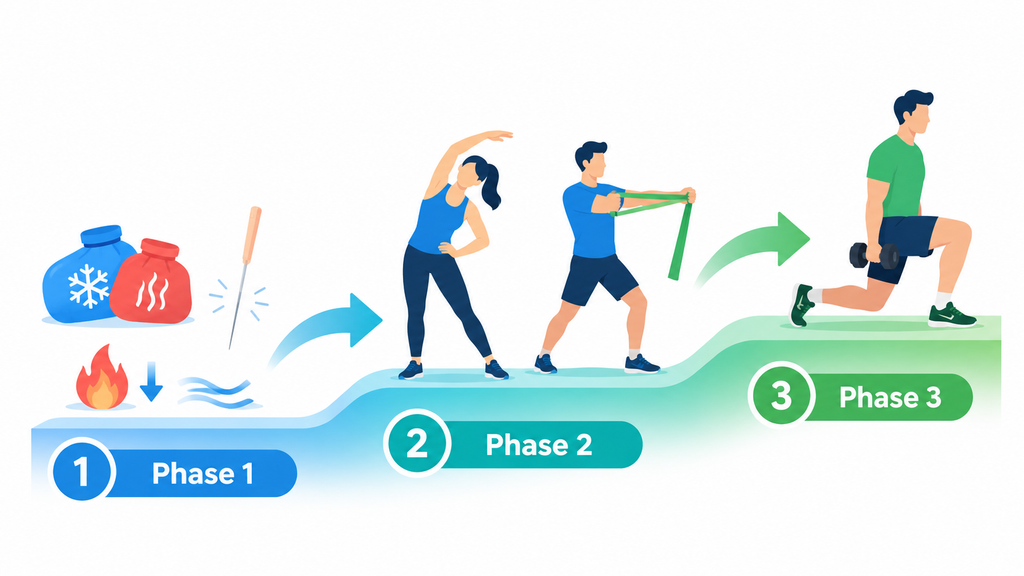
Does this mean passive physiotherapy is useless? Absolutely not. Passive modalities play a vital role—when used as a bridge or a procedure, not a destination or a final goal. In my PT career, once the clients are ruled out of other major complications or differential diagnosis (i.e. red flags) through medical screening and physical examination, a PT diagnosis with a course of treatment is determined. Depending on the severity and onset of the pathology, I would often plan my course of treatment as follows: Passive care opens the door of opportunity, but active exercise walks you through it. This consideration and planning can be summarized into 3 phases:
Phase 1: Calming the Fire (Passive Modalities)
In the acute stage of an injury or an onset, high pain levels inhibit muscle activation. Short-term PT modalities such as ultrasound, IFC and TENS machine, hot/cold packs and acupuncture reduces pain to a manageable threshold.
Phase 2: Rebuilding Movement (Active Progressions)
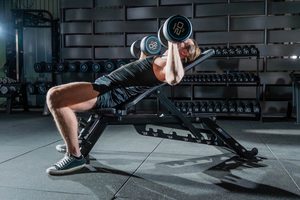
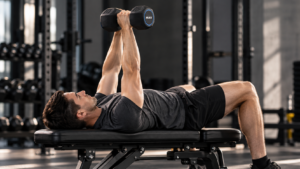
Once pain is modulated or gradually subsided, transition to controlled movements and exercises will be taught — initial active range of motion movements, stretching exercises, and gradual progression of resistance training using resistance bands, cable machines, free weights and strengthening equipment to restore range of motion, flexibility, strength and joint stability.
Phase 3: Building Resilient Capacity (Progressive Loading)
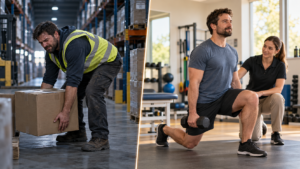
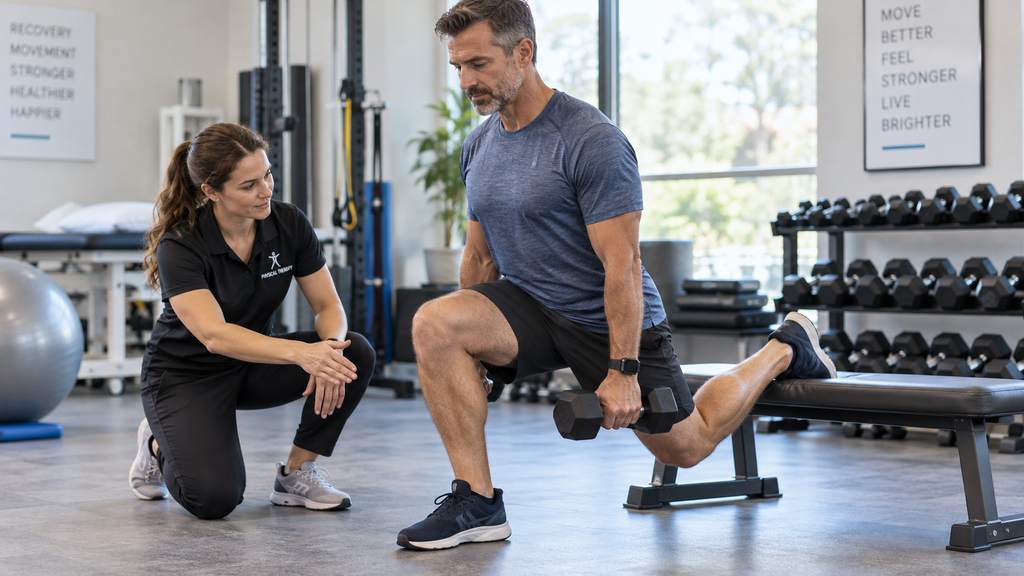
Once pain is under control and full range of motion is largely restored, to prevent recurrence or future flare-ups, a gradually loading of the movement patterns will be incorporated to make muscles, tendons, and joints strong enough to handle daily life, sports, and heavy physical stress. An example for knee injuries is to build multi-directional and asymmetrical strength with split squats and progress to holding a light dumbbell or barbell for controlled heavy loading. This exposes patellar (knee tendons) and hip musculature to heavy unilateral loads for the rebuilding of single-leg stability which will be crucial preventing re-injury during running, bending, or lifting activities.
| Phase | Primary Goal | Interventions | Key Milestones |
| 1. Calming the Fire | Modulate acute pain | Passive modalities | Alleviate pain to a manageable threshold |
| 2. Rebuilding Movement | Restore mobility, flexility, strength & joint stability | Active movement and exercises progression | Restored full ROM, stability and strength |
| 3. Building Resilient Capacity | Prevent recurrence | Incorporate multi-directional movement & activity-specific building | Building resilient under heavy stress |
(Chart 2: 3-Phase Primary Goal, Intervention & Key Milestones)
III. Education, Education, and Education!
Often times my 3-phase course of plan is interrupted due to non-compliance of clients. One common saying is:
“I still have pain [in certain area], I cannot do any of the movements or exercises prescribed to me”.
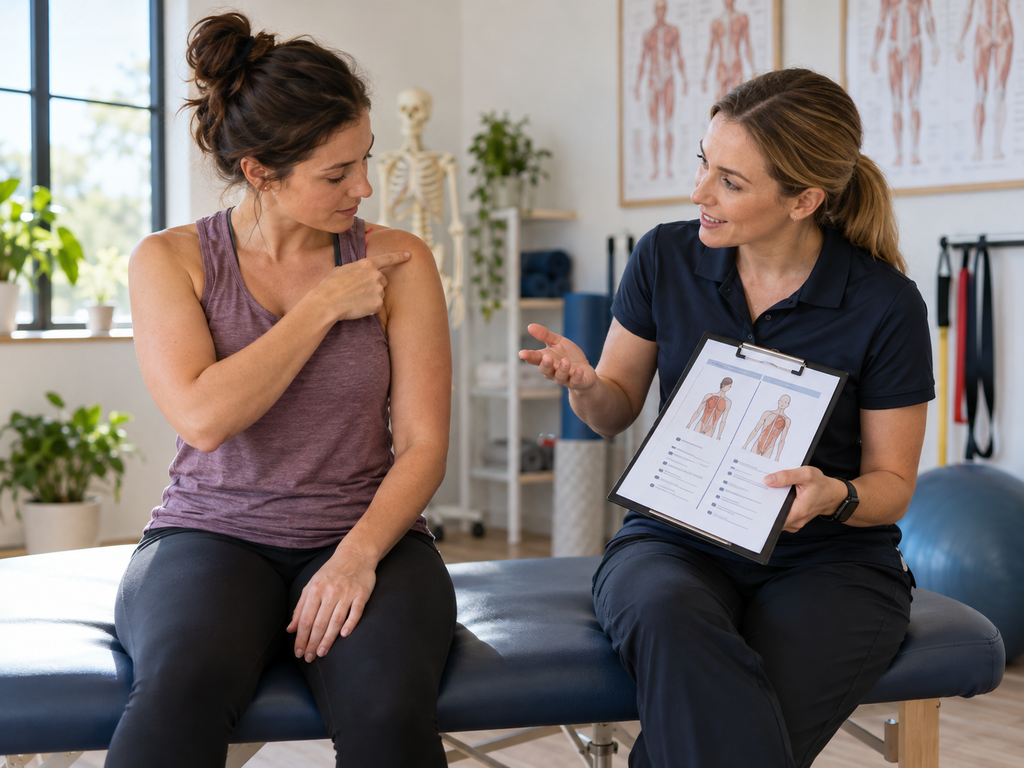
This is where client education plays a major part in order to successfully implementing this 3-phase framework. Client education must guide every step of the process. The educational focus for each phase is as follows:
Phase 1: Reassure the client that acute pain does not equal permanent damage. Educate them on pain desensitization and explain that passive modalities are merely a temporary bridge to create a window of opportunity for movement. Pain relieving posture and positions will be taught when passive modalities are not available.
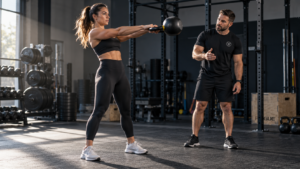
Phase 2: Teach the client the importance of proper movement and muscle/tendon mechanics, breath control, and joint stability and alignment. Help them rewire their neuromuscular pathways so they lose the fear of bending, reaching, or loading the affected area.
Phase 3: Educate the client on the principles of progressive overload and tissue adaptation. Teach them how to self-monitor fatigue, adjust loads, and recognize good discomfort (muscular effort) versus bad discomfort (joint pain).
IV. Real Recoveries: Three Clients, Three Countries
Here is how taking an active approach to health and recovery has transformed experiences of my clients across different countries:
1.) “From Chronic Flare-Ups to Personal Bests” — “After years of relying on massages and weekly spinal manipulations that only lasted a few days, working with a PT who understood active rehabilitation changed everything. Learning how to properly use resistance equipment and build core stability gave me my active lifestyle back!” — Richard B. (An Accountant) from Vancouver, Canada
2.) “No Longer Relying on a Cane for Walking” — “As I travel around the world 2-3 times every month, I used to travel with a cane for my chronic heel pain. The combination of proper footwear with an active rehabilitation addressing the root cause of my weak core and misalignment of pelvis has now helped me to travel and walk freely without a cane.” — Ronnie C. (CEO of a Company) in Hong Kong
3.) “A Complete Shift in Recovery in Our Culture” — “In India, majority of the people think rest was the only cure for joint discomfort or pain. Education by PT on passive treatment versus active exercises has drastically changed the concept of our gym users. Integrating active movement guidelines and training our staff on proper equipment ergonomics reduced member drop-outs due to minor injuries.” — Rahul A. (Commercial Gym Owner) in New Delhi, India
Editor’s note: These accounts reflect individual experiences shared with the author; individual results vary, and outcomes depend on diagnosis, adherence and overall health.
V. The Bottom Line
If you are currently recovering from an injury or dealing with chronic joint stiffness, don’t rely on passive relief alone. Use PT modalities, acupuncture, manual therapy…etc. to manage acute discomfort, but prioritize active movement, mobility, strength, and stability as your primary prescription for long-term health and resilience!
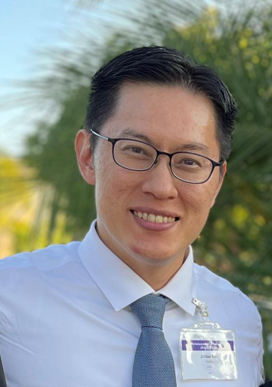
About the author — Dr. Jordan K. (PT / Certified in Acupuncture); BMR (PT) – Canada; MscMP – Hong Kong; DPT – USA