
Equipment procurement decisions in commercial gyms are most defensible when they are grounded in actual demand data rather than catalogue preferences or supplier recommendations. What members use most, what categories are growing fastest across the industry, and what equipment types are driving member retention and acquisition — these signals, read accurately, produce procurement decisions that generate return. The five equipment categories examined in this article are those for which the convergence of market data, member utilisation evidence, and industry trend reporting in 2025 is clearest. They represent the categories where procurement investment has the highest probability of delivering value across a commercial gym’s operational horizon.
Category 1: Free Weight Equipment — Sustained Growth Across All Markets
Free weights — dumbbells, barbells, kettlebells, and weight plates — represent the consistently highest-utilisation category on commercial gym floors, and the trend strengthened through 2024–2025. According to Market Data Forecast’s 2025 Commercial Fitness Equipment Market Report, strength training equipment and free weights are among the most in-demand categories in commercial fitness globally, with growth driven by sustained consumer interest in resistance training for health maintenance, physique goals, and longevity.
The demand drivers are structural, not cyclical. Free weight participation has grown consistently across all major membership segments — recreational members, competitive athletes, and the growing senior fitness population — each with distinct equipment needs but shared demand for the category. This multi-demographic appeal makes free weight training equipment the most universally defensible procurement category for any commercial gym operator in 2025.
The procurement implication is specific: invest in a complete dumbbell range to the highest weights your demographic demands (typically 2.5–50 kg for general commercial, extending to 60 kg for strength-focused facilities), a full kettlebell selection, and sufficient barbell stations to meet peak-hour demand without queuing. In facilities where the free weight area is the highest-utilisation zone, under-investing here in favour of variety in other categories is the most common procurement error.
Category 2: Functional Training Equipment — From Niche to Mainstream
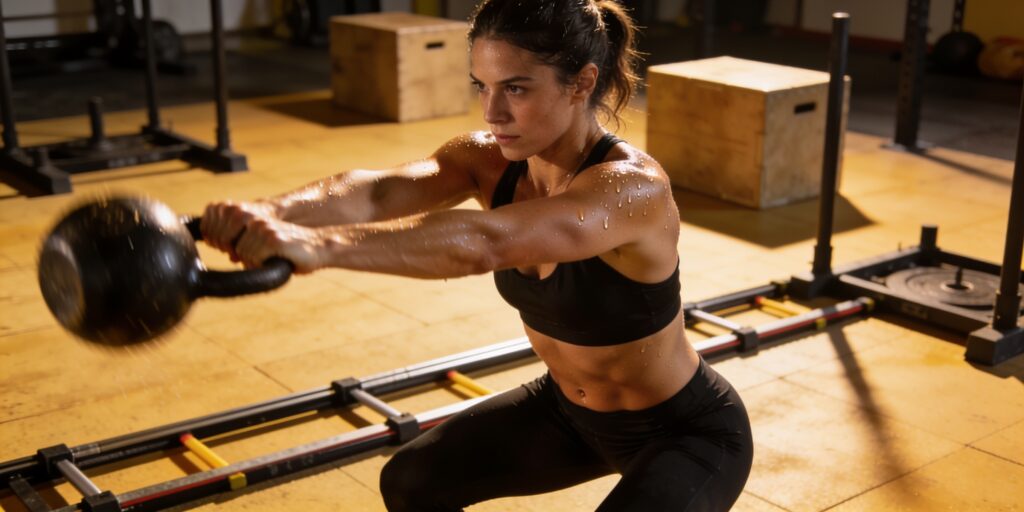
Functional training — broadly defined as multi-joint, multi-plane movement training that mimics or enhances real-world and sport-specific movement patterns — has completed its transition from niche category to mainstream commercial expectation. The equipment that supports it — plyo boxes, sleds, battle ropes, medicine balls, kettlebells, and suspension trainers — has moved from the periphery of commercial gym floors to their dedicated functional training zones, which are now a standard feature rather than a premium differentiator.
The demand signal for functional training equipment in 2025 is particularly strong among the demographic segments driving commercial gym membership growth: millennials and Gen Z members who associate functional and performance-oriented training with health identity, corporate wellness programmes that prioritise movement quality over machine-based isolation, and the growing population of older adults whose fitness goals explicitly include functional independence rather than aesthetics alone.
For commercial gyms that have not yet invested in a functional training zone, 2025 represents a late-stage opportunity rather than an early mover advantage. For those who have established a zone, the demand signal in 2025 supports investment in expanding the equipment density and variety of that zone — particularly in the sled and loaded carry categories, which are currently under-represented in most commercial functional zones relative to member demand.
Category 3: Cable Machines and Functional Trainers — The Universal Station
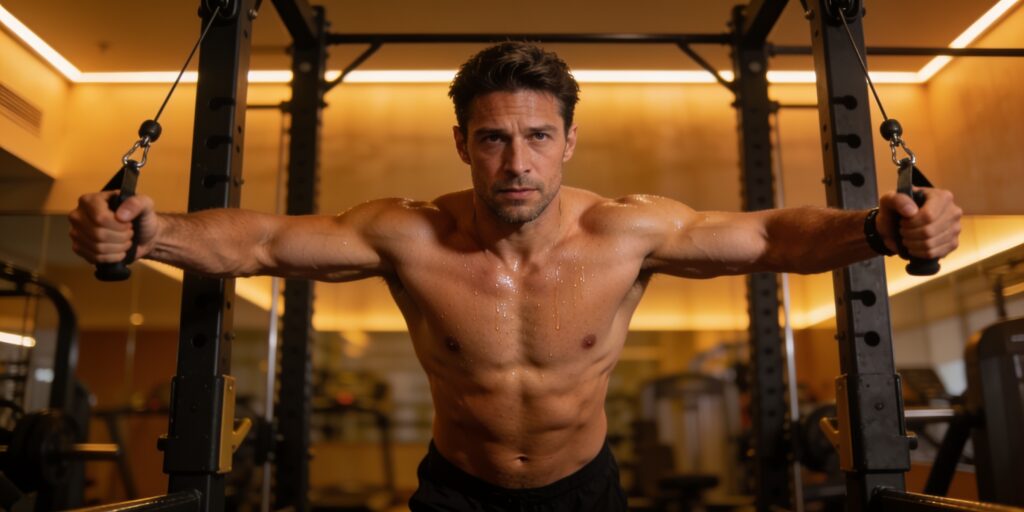
Cable machines and dual-function trainers — equipment that provides pulley-based resistance across multiple attachment configurations and movement planes — are the highest-versatility, highest-utilisation strength station category in commercial gyms after the free weight area. Their combination of exercise variety (dozens of exercises from a single footprint), adjustable resistance for multiple user populations, and low injury risk for beginners and experienced members alike makes them consistently high-demand across all commercial gym membership profiles.
The 2025 market specifically shows strong growth in functional trainer format — dual cable systems with independently adjustable pulleys at multiple heights — over single-stack cable machines. The functional trainer’s ability to support horizontal, diagonal, and rotational cable movements that single-stack towers cannot address is driving procurement decisions in facilities upgrading their cable machine inventory.
The American College of Sports Medicine (ACSM) consistently ranks strength training and functional fitness as top global fitness trends. Cable systems are the single equipment category that most effectively serves both — providing progressive resistance for strength development while enabling the multi-plane, movement-quality-focused programming that functional fitness demands. For commercial gyms looking to serve a broad membership with a single high-investment equipment category, cable machines and functional trainers deliver the highest versatility per dollar of capital expenditure.
Category 4: Plate-Loaded and Iso-Lateral Strength Machines — Authentic Loading Returns
After a period in which digital-screen-equipped selectorised machines dominated new commercial gym investment, 2025 shows clear demand signals for plate-loaded and iso-lateral strength machines — equipment that allows users to load with actual weight plates rather than selecting from a weight stack. The driver is the sustained growth of the serious strength training population in commercial gyms: members who are comfortable with barbells and plates, who understand loading principles, and who seek machines that provide the feel and loading flexibility of free weights with the guided safety of machine architecture.
Iso-lateral machines — where each arm or leg operates independently — represent the most technically sophisticated segment of this demand. The training science behind iso-lateral movement (bilateral deficit correction, natural convergence path, enhanced core engagement) is increasingly understood by both coaches and informed recreational athletes, and the demand for iso-lateral pressing and pulling stations is growing specifically among the strength-focused commercial gym demographic that is most valuable for member retention.
Alex Athletics’ commercial strength equipment range, including the IsoMotion Press, is directly positioned to serve this demand category. The growth in plate-loaded and iso-lateral demand should be read as a signal that serious strength training is moving to the centre of commercial gym culture, and equipment procurement decisions that reflect this shift will position facilities well for the membership demographics that are growing fastest.
Category 5: Recovery and Wellness Equipment — The Fastest-Growing Category
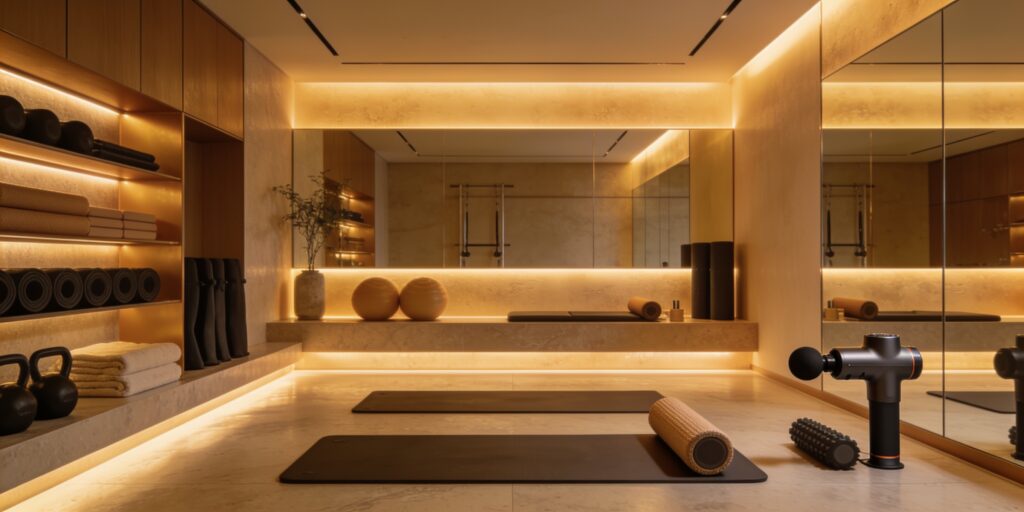
Recovery equipment — foam rollers, massage tools, stretching aids, compression devices, and increasingly cold and heat exposure systems — represents the fastest-growing equipment category in commercial gyms in 2025, albeit from a smaller base than the established strength and cardio categories. The growth is driven by a fundamental shift in how the fitness-engaged consumer understands the relationship between training and recovery: rest and recovery are not the absence of training — they are a training modality in their own right.
The Health & Fitness Association (IHRSA) identifies member experience enhancement and programming differentiation as primary drivers of boutique gym membership growth and retention. Recovery zones — dedicated spaces with foam rolling stations, mobility tools, and in premium facilities, cold plunge or infrared sauna access — have become the most effective member experience differentiator available to commercial gym operators who cannot compete with large chains on equipment volume or facility size.
The procurement implications for recovery equipment vary significantly by facility type. For boutique studios and premium commercial gyms, investment in recovery zone infrastructure is among the highest-return facility investments available in 2025. For budget commercial gyms and general fitness facilities, a lower-investment version — foam roller and mobility tool sets, stretching zone with appropriate flooring — delivers significant member experience value at accessible cost.
Equipment Category Demand Analysis 2025
| Equipment Category | 2025 Demand Signal | Growth Driver | Procurement Priority |
|---|---|---|---|
| Free weights (dumbbells, barbells, kettlebells, plates) | Very high — consistently highest floor utilisation | Multi-demographic; longevity/health positioning of resistance training | Tier 1 — highest priority across all facility types |
| Functional training equipment (sleds, plyo boxes, battle ropes) | High — moved to commercial mainstream | Performance identity among growing member segments | Tier 1 — standard feature for new builds and renovations |
| Cable machines / functional trainers | High — universal applicability across member levels | Versatility, low injury barrier, strength + functional dual use | Tier 1 — core investment for any commercial gym |
| Plate-loaded and iso-lateral machines | Growing — strength training population expanding | Authentic loading experience; iso-lateral science awareness | Tier 2 — strong priority for strength-focused facilities |
| Recovery and wellness equipment | Fast-growing — from niche to expected | Wellness identity; member experience differentiation | Tier 2 — high priority for boutique/premium; medium for general commercial |
| Connected cardio equipment | Moderate — established category, slowdown in adoption curve | Technology integration demand from tech-forward members | Tier 2–3 — consider leasing over purchase due to technology cycle |
| Pilates / mind-body equipment | Growing in boutique context; stable in commercial | Boutique studio expansion; rehabilitation/senior market | Tier 3 — specialist investment for dedicated studio contexts |
| Traditional selectorised machines | Stable but plateauing — being supplemented by plate-loaded | Accessibility for beginners remains relevant | Tier 2–3 — prioritise for general commercial; supplement for performance |
What Member Behaviour Data Reveals About Procurement Priorities
The most reliable demand signals for commercial gym equipment procurement are not market research reports or manufacturer sales data — they are the utilisation patterns on your own gym floor. Peak-hour equipment availability, wait times for specific stations, and the visible concentration of members in specific zones reveal actual demand with precision that any external survey cannot match.
Across commercial gyms globally, two patterns are consistently reported in 2025: the free weight area is where wait times are longest during peak hours, and machine zones have the lowest utilisation per square metre relative to their floor allocation. This mismatch — overinvestment in machine floor area, underinvestment in free weight capacity — is the most persistent structural error in commercial gym equipment configuration. Correcting it is, for most facilities, the highest-return procurement decision available.
The Connected Equipment Question: Opportunity or Overspend?
Connected fitness equipment — cardio machines and strength stations with integrated screens, live class access, performance tracking, and user profile connectivity — generated significant procurement excitement in the 2020–2023 period. By 2025, the picture is more nuanced. According to the Market Data Forecast report, over 60% of new commercial fitness equipment installations now include some form of digital interactivity. However, the technology obsolescence cycle for connected equipment is dramatically shorter than the mechanical service life — screen software becomes outdated within three to four years in a way that a well-built barbell or dumbbell rack does not.
The strategic procurement recommendation for connected equipment in 2025 is to treat it differently from foundational equipment: consider leasing over purchasing for technology-intensive cardio consoles, and purchase foundational strength and functional training equipment outright. This approach hedges against technology obsolescence in the connected category while capturing the long-term value of well-specified mechanical equipment.
2025 Procurement Priority Guide by Facility Type
| Facility Type | Top 3 Procurement Priorities in 2025 | Secondary Investment |
|---|---|---|
| General commercial gym | Free weights (expand range + capacity), Cable machines, Functional trainer | Recovery zone; replace worn selectorised machines with plate-loaded alternatives |
| Boutique strength studio | Free weights (full heavy range), Iso-lateral pressing machine, Cable system | Recovery equipment; specialty barbell and plate selection |
| Boutique functional / HIIT studio | Functional training equipment (sleds, plyo, battle ropes), Kettlebells, Cable functional trainer | Recovery zone; dumbbell expansion |
| Sports performance facility | Olympic barbells and platforms, Sled and turf equipment, Functional training accessories | Iso-lateral machines for accessory work; recovery tools |
| Hotel / hospitality gym | Premium dumbbells (TPU), Functional trainer, Adjustable benches | Recovery accessories (foam rollers, bands); connected cardio (consider leasing) |
| Corporate wellness facility | Full dumbbell set, Cable machine, Recovery zone | Functional training accessories; ergonomic resistance equipment |
Frequently Asked Questions
What is the single highest-demand equipment category in commercial gyms in 2025?
Free weights — dumbbells, barbells, kettlebells, and weight plates — consistently record the highest utilisation rates across commercial gym floor categories in 2025, and represent the most universally applicable procurement investment across all facility types and membership demographics. The sustained growth of resistance training participation across all age groups, the multi-demographic appeal of free weight training, and the consistent data showing peak-hour queuing in free weight zones make this the clearest procurement priority for any commercial gym operator assessing their 2025 investment plan.
Is functional training equipment now expected in all commercial gyms?
Yes — by 2025, a functional training zone with at least some dedicated equipment is an expected feature rather than a premium differentiator in most commercial gym segments. The shift is demographic: the membership cohorts driving commercial gym growth — younger adults, performance-oriented recreational athletes, and wellness-focused corporate clients — expect functional training capability as a baseline. Gyms that lack this zone are now at a disadvantage relative to competitors that have established one, regardless of the quality of their conventional strength and cardio offering.
Should commercial gyms invest in connected cardio equipment in 2025?
Connected cardio equipment — machines with integrated screens, live class access, and performance tracking — is a useful member engagement tool but should be treated differently from foundational equipment in procurement decisions. The technology obsolescence cycle (3–4 years for screen systems) is dramatically shorter than the mechanical service life of the equipment (8–15 years). This mismatch makes leasing the preferred procurement model for connected cardio, while foundational strength and functional equipment should be purchased outright. Investing primarily in connected equipment at the expense of free weight capacity or functional training zone development is a procurement error that member utilisation data consistently exposes.
What is driving demand for recovery equipment in commercial gyms?
Recovery equipment demand is driven by a fundamental shift in consumer fitness identity: recovery is increasingly understood as a training modality rather than the absence of training. Members who invest heavily in their fitness identity — the core demographic for premium commercial gym membership — now expect recovery support as part of their facility membership. The market data confirms this: recovery zones are the most effective member experience differentiator for boutique and premium commercial gyms in 2025, creating competitive distance from facilities that offer only conventional training equipment without dedicated recovery infrastructure.
How should procurement decisions respond to the growth in strength training participation?
The sustained growth in strength training participation supports three specific procurement responses in 2025: expanding the dumbbell range to heavier weights to accommodate strength-oriented members who are outgrowing standard commercial gym dumbbell ceilings; increasing the number of barbell stations (squat racks and bench press stations) relative to machine coverage to reduce peak-hour wait times; and considering iso-lateral or plate-loaded strength machines as an alternative to traditional selectorised machines for the portion of new strength equipment investment. This shift in mix — more free weights and plate-loaded equipment, somewhat fewer selectorised units — reflects where member demand is moving in 2025.
Conclusion
The clearest commercial gym equipment demand signals in 2025 point consistently toward the foundational categories — free weights, functional training equipment, and cable systems — and toward recovery as the fastest-growing supplementary investment. The technology-driven category (connected cardio) warrants leasing rather than purchasing given its obsolescence cycle. The structural error most consistently identified in 2025 procurement reviews is underinvestment in the free weight area relative to machine coverage: the category that members actually queue for during peak hours is the one most commonly under-resourced relative to its demand.
For facility operators reviewing their 2025–2026 equipment investment plan, contact our team to discuss how Alex Athletics’ free weight training equipment and functional training equipment ranges can support the categories where demand is strongest.


