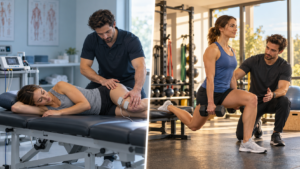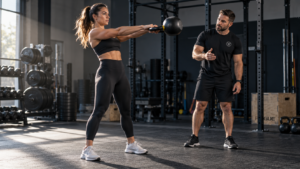
Walk into any major commercial district in a large city today and the evidence is visible: a new kind of fitness business is multiplying. Boutique fitness studios — small, specialized, premium-priced facilities focused on a single training modality — are expanding faster than any other segment of the commercial fitness industry. They are capturing members, spending, and cultural attention at a pace that is forcing traditional gym operators to reconsider fundamental assumptions about how fitness facilities should be structured, priced, and equipped.
For commercial gym operators and fitness equipment buyers, understanding the boutique studio phenomenon is no longer optional background reading. It is a strategic necessity. This article explains what boutique fitness studios are, why they are growing so fast, what challenge they pose to traditional gyms, and what equipment implications follow for both sides of the competitive divide.
The Boutique Fitness Market: Size and Growth
The numbers behind the boutique fitness phenomenon are substantial and accelerating. According to market research from market.us, the global boutique fitness studio market was valued at USD 40.1 billion in 2024 and is projected to reach USD 80.4 billion by 2034, growing at a compound annual growth rate (CAGR) of 7.2% through the forecast period. North America leads with over 42% of global market share, driven by dense urban markets and a fitness culture that has enthusiastically adopted the boutique model.
In the United States specifically, the boutique fitness market is growing even faster than the global average. Research firms project the US boutique segment to reach nearly $13 billion by 2032 at a CAGR of 12.8%, well above the growth rate of traditional gym memberships. Group fitness classes and personal training, the two pillars of the boutique model, account for over 60% of total boutique market revenue — a proportion that reflects the degree to which specialized instruction, not simply access to equipment, is the product being sold.
These growth rates contrast sharply with the more moderate expansion of traditional big-box gym operators. While the overall global fitness industry is growing at 5–9% annually according to the Health & Fitness Association’s 2025 Global Report, boutique studios are capturing a disproportionate share of new consumer spending on fitness, particularly among urban demographics with higher disposable incomes.
What Defines a Boutique Fitness Studio
The term “boutique” in the fitness context describes a specific business model and customer experience, not simply a small gym. Understanding the defining characteristics of boutique studios is essential to understanding why they compete so effectively against traditional gyms in certain market segments.
Specialization in a Single Modality
Traditional gyms offer breadth: a wide selection of cardio equipment, resistance machines, free weights, group fitness rooms, and often ancillary services like pools, saunas, and cafes. Boutique studios do the opposite. They focus on one training modality — Pilates, indoor cycling, yoga, HIIT, barre, boxing — and build the entire facility, instructor team, programming, and aesthetic around that single discipline. This specialization allows boutique studios to deliver a depth of expertise and environmental curation that broad-based gyms cannot match in any single training category.
Small Class Sizes and Instructor Attention
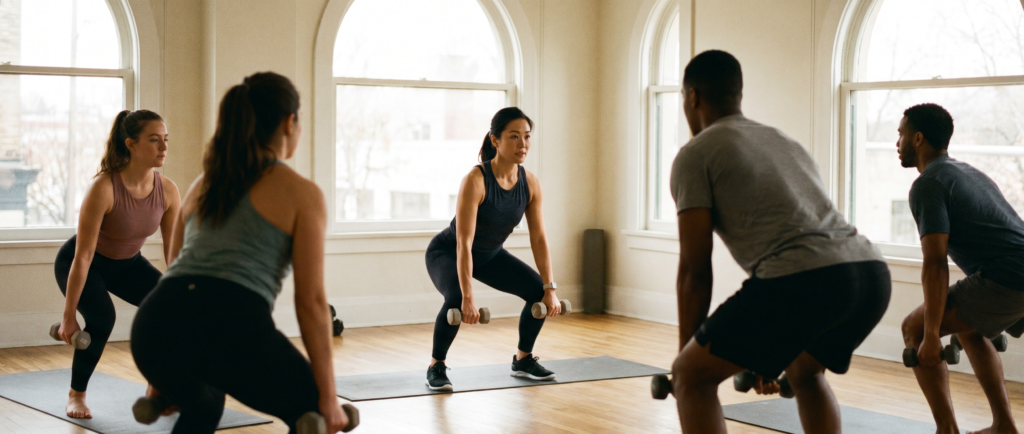
Where a large group fitness class at a traditional gym might accommodate 30 or more participants with limited individual attention, boutique studios typically cap class sizes at 10 to 20 participants. Reformer Pilates studios often run classes of 8 to 12 to ensure every participant receives hands-on correction and instruction. This intimate dynamic is a core part of the value proposition — members pay more because they receive more personalized instruction and feel more accountable to the class environment.
Premium Pricing and Revenue per Square Foot
Boutique studio memberships typically cost significantly more than traditional gym memberships. Where a traditional gym membership might run USD 30 to 80 per month in most markets, a boutique studio pass can cost USD 150 to 300 or more per month, with per-class drop-in rates ranging from USD 25 to 45. This premium pricing reflects both the higher instructor-to-member ratio and the curated experience on offer. From an operator perspective, boutique studios often generate considerably higher revenue per square foot than traditional gyms despite (or because of) their smaller physical size.
Community and Identity
Perhaps the most powerful differentiator of the boutique model is the sense of community and identity it creates. Members of a Pilates studio, a boxing gym, or a cycling studio do not merely share a facility — they share a training philosophy, a social group, and in many cases a significant part of their personal identity. This community dynamic drives retention at rates that traditional gyms rarely achieve. When members are deeply embedded in a studio community, the friction of leaving is social as well as financial.
How Boutique Studios Challenge Traditional Gyms
The boutique model creates competitive pressure on traditional gyms through several distinct mechanisms. Understanding them helps operators identify where they are most exposed and where there is room to respond.
Member Migration at the High-Value End
Boutique studios do not typically compete for budget-conscious gym members. They compete for the highest-value, most engaged segment of the gym-going population: members who exercise regularly, spend significantly on their fitness, and are motivated by programming quality rather than price. This is precisely the member segment that traditional gyms most need to retain, because regular, committed members generate disproportionate revenue through memberships, personal training sessions, and ancillary spending.
When boutique studios attract these members away from traditional gyms — or when members add a boutique studio membership and subsequently downgrade or cancel their traditional gym membership — the revenue impact on traditional operators is asymmetric. The loss of a high-value engaged member hits harder than aggregate membership count suggests.
Redefining What Members Expect from a Gym
Exposure to boutique studio environments also changes member expectations from traditional gyms. Members who have experienced the personalized instruction, curated atmosphere, and focused programming of a boutique studio return to traditional gyms with a new reference point. Equipment cleanliness, instructor quality, programming specificity, and environmental design that were previously “nice to have” become expected standards. Traditional gyms that do not evolve their offering in response to raised member expectations face heightened attrition risk from exactly the members they can least afford to lose.
Capturing the Next Generation of Gym Members
New gym entrants — particularly younger urban consumers who are making their first fitness decisions — are often more likely to begin their gym journey at a boutique studio than at a traditional big-box gym. If the boutique model is the first fitness experience a new member has, it becomes their baseline. Traditional gyms that cannot offer a comparable experience in at least one specialty area face the risk of being bypassed by an incoming generation of fitness consumers who never establish a big-box gym habit in the first place.
Boutique Studios vs Traditional Gyms: A Structural Comparison
| Dimension | Boutique Fitness Studio | Traditional Commercial Gym |
|---|---|---|
| Facility size | Typically 100–500 m² | Typically 1,000–5,000+ m² |
| Training modality | Single or closely related disciplines | Broad — cardio, weights, classes, pool, etc. |
| Class size | 8–20 participants | 15–60 participants (group fitness) |
| Membership pricing (monthly) | USD 150–300+ | USD 30–80 |
| Revenue per square foot | High (premium pricing, high utilization) | Moderate (broad membership base, shared equipment) |
| Member retention driver | Community, instructor relationships, identity | Convenience, price, equipment access |
| Equipment investment focus | Specialized, high-spec, modality-specific | Broad, high-volume, mixed categories |
| Capital cost per unit | High per item (quality prioritized) | Mixed (volume purchasing, wider supplier base) |
| Programming model | Structured, instructor-led, class-based | Self-directed, with group fitness as supplement |
| Scalability | Franchise and multi-location chains possible | Established multi-site and chain models |

How Traditional Gyms Are Responding
Established gym operators are not standing still in the face of boutique competition. Several response strategies have emerged across the industry, each with different equipment and capital implications.
Studio-Within-a-Gym Spaces
One of the most common responses is the creation of dedicated studio spaces within larger facilities — a Pilates zone, a cycling studio, a functional training room — that replicate the boutique experience inside the traditional gym structure. This approach allows big-box operators to serve members who want specialized instruction without requiring those members to hold a separate boutique membership. It also creates a premium membership tier with associated revenue uplift.
Executing this strategy well requires investment in specialized equipment. A Pilates zone that uses entry-level or poorly maintained reformers will not compete with a dedicated Pilates boutique that has invested in top-specification equipment. For operators building out studio-within-a-gym spaces, the quality threshold for commercial Pilates equipment needs to match or approach what dedicated boutique studios use.
Small Group Training Programs
Personal training at the individual level is expensive for members and resource-intensive for operators. Small group training — sessions of 3 to 8 participants with a single coach — offers a middle path that delivers coaching density and community formation at a price point more members can access. As noted in HFA data, 32.3% of gym members participated in small group training in 2024, a record high. Gyms that build out small group training programs create a boutique-like experience within their infrastructure without requiring the overhead of a fully specialized studio model.
Small group training programs depend heavily on versatile, high-quality free weight equipment. A well-equipped small group training bay with commercial-grade dumbbells, kettlebells, and functional training accessories can serve multiple groups per day without significant wear or replacement requirements — making it a high-ROI investment relative to specialized machine equipment.
Specialization Within Verticals
Some traditional gym operators have chosen to double down on specialization within specific verticals where they already have a footprint. A gym chain that is already strong in strength training programming, for instance, can invest more heavily in its barbell and rack infrastructure, develop structured strength training programming under certified coaches, and explicitly position itself as the premium destination for strength sports in its market — competing against boutique strength gyms on their own terms. Explore the full range of commercial strength equipment to understand the specification depth this kind of positioning requires.
Equipment Implications: What Boutique Studios Purchase and Why
For fitness equipment suppliers and distributors, boutique studios represent a growing and distinct customer segment with specific purchasing priorities. Understanding those priorities is relevant both to operators considering boutique-style facilities and to those who supply them.
| Studio Type | Primary Equipment Category | Key Procurement Criteria | Volume per Studio |
|---|---|---|---|
| Pilates Studio | Reformers, Cadillac, Chair, Barrel | Carriage smoothness, spring calibration, upholstery durability | 6–12 reformers, 1–2 towers |
| Functional Fitness Studio | Dumbbells, Kettlebells, Barbells, Racks | Load range, surface durability, floor protection | Full dumbbell set (5–50kg), 2–4 racks |
| HIIT / Circuit Studio | Dumbbells, Kettlebells, Battle Ropes, Mats | Compact, mobile, easy to clean, durable rubber coating | High quantity of moderate-weight units (8–32kg) |
| Yoga / Barre Studio | Light Hand Weights, Resistance Bands, Props | Weight accuracy, grip texture, aesthetic finish | Sets of 1–5kg, multiple units per participant |
| Boxing / Martial Arts Studio | Heavy Bags, Speed Bags, Light Dumbbells | Mounting integrity, bag fill quality, compact storage | 8–16 stations, supplementary free weights |
| Strength / Powerlifting Studio | Barbells, Plates, Power Racks, Deadlift Platforms | Tensile strength, calibration precision, rack load rating | 4–8 racks, full plate and barbell sets |
Boutique studios prioritize quality over quantity in ways that differ from traditional gyms. A traditional gym buying a dumbbell set for a general-population free weight zone may prioritize cost efficiency across a wide weight range. A boutique functional fitness studio buying the same category of equipment will prioritize surface feel, handle diameter, rubber compound hardness, and long-term aesthetic appearance — because the equipment is central to the member experience in a way it never is in a big-box setting where it competes visually with dozens of other equipment categories. Contact Alex Athletics for boutique studio equipment specifications and pricing appropriate to your studio’s volume and quality requirements.

The Coexistence Opportunity
Not every market dynamic is a zero-sum competition. The growth of boutique studios has also created a “multi-membership” phenomenon, in which fitness consumers hold simultaneous memberships at a traditional gym for its breadth and at one or more boutique studios for specialized programming. According to the ACSM’s fitness trend analysis for 2026, hybrid fitness behavior — combining different facility types and modalities within a single person’s fitness routine — is increasingly common among high-engagement fitness consumers.
This means that traditional gyms and boutique studios can coexist in the same market without directly cannibalizing each other’s membership bases, provided each facility delivers genuine value in its respective category. Traditional gyms that invest in broad, high-quality equipment and maintain competitive pricing for access-oriented members continue to serve a large and stable population. Boutique studios that deliver expert instruction, community, and curated experience at premium price points serve a different and complementary need.
The competitive challenge for traditional gyms is not to become boutique studios — a structural and financial impossibility at scale — but to ensure they do not cede their high-engagement, high-value members to boutique alternatives by neglecting the quality of their programming, instructor talent, and equipment. The equipment investment decisions that follow from that goal are specific and actionable.
Frequently Asked Questions
What is the main difference between a boutique fitness studio and a traditional gym?
Boutique studios specialize in a single training modality (such as Pilates, cycling, or functional fitness), offer smaller class sizes with more personalized instruction, and charge premium membership prices. Traditional gyms offer broad equipment access across multiple training categories at lower membership costs, serving a wider demographic with a more self-directed model.
Why are boutique fitness studios growing so much faster than traditional gyms?
Boutique studios tap into shifting consumer preferences for personalized, community-driven, and experience-focused fitness. Factors including the mainstreaming of specialized training modalities, social media’s influence on fitness culture, and rising consumer willingness to pay for expert instruction have all driven boutique growth rates above those of the broader gym market.
Can a traditional gym effectively compete with boutique studios?
Yes, through strategic differentiation rather than direct imitation. Creating dedicated studio zones within larger facilities, building out small group training programs, investing in instructor quality, and concentrating equipment investment in specialty categories allows traditional gyms to offer boutique-like experiences without abandoning the broad-access model. The key is genuine investment in quality rather than superficial studio branding.
What equipment categories do boutique fitness studios prioritize?
Equipment priorities vary by studio type. Pilates studios invest heavily in reformers, Cadillacs, chairs, and barrels. Functional fitness and HIIT studios prioritize dumbbells, kettlebells, and barbells. Strength studios invest in barbells, power racks, and calibrated plates. In every category, boutique studios tend to prioritize quality and aesthetic finish above cost efficiency, because the equipment is a core part of the member experience they are selling.
Is the boutique fitness model sustainable long-term, or is it a trend?
The boutique model has demonstrated sustained growth across more than a decade and has survived significant disruption, including the COVID-19 pandemic. While individual studios and formats will experience their own cycles, the underlying consumer demand for personalized, community-driven fitness experiences is well-established. Market projections through 2034 anticipate continued growth, though at rates that may moderate from the high-intensity expansion of the 2015–2025 period as the market matures.
Conclusion
The rise of boutique fitness studios is one of the most significant structural developments in commercial fitness in the past decade. Their growth is data-confirmed, their appeal to high-value members is well-documented, and their challenge to traditional gym operators is real. The response for traditional gyms is not panic but strategy: understanding where boutique studios compete most effectively, investing in quality and programming in those areas, and ensuring that equipment decisions reflect the raised expectations that boutique fitness has established among engaged members.
Whether you operate a traditional gym looking to strengthen your competitive position, or a boutique studio investing in the right specialized equipment for your modality, the equipment decisions you make define the quality of the experience you deliver. If you are ready to discuss equipment specifications for boutique or commercial gym environments, contact Alex Athletics to explore sourcing options suited to your facility type and programming goals.