
The commercial gym floor of a decade ago had a recognizable configuration: long rows of treadmills and ellipticals along the perimeter, banks of selectorized resistance machines occupying the center, and a modest free weight corner that most floor plans treated as an afterthought. That configuration was logical for the member behavior patterns and programming models of the time. It is increasingly out of alignment with both.
Across commercial gyms, boutique studios, and athletic performance facilities, modular fitness equipment is replacing static single-purpose machines as the dominant infrastructure investment. The shift is not aesthetic — it is driven by measurable business logic: modular systems deliver higher revenue per square foot, adapt to changing programming demands without capital replacement, and create training environments that attract and retain the member demographics driving industry growth. For equipment buyers and facility operators considering their next procurement cycle, understanding the modular design trend is no longer optional background reading.
What Modular Fitness Equipment Actually Means
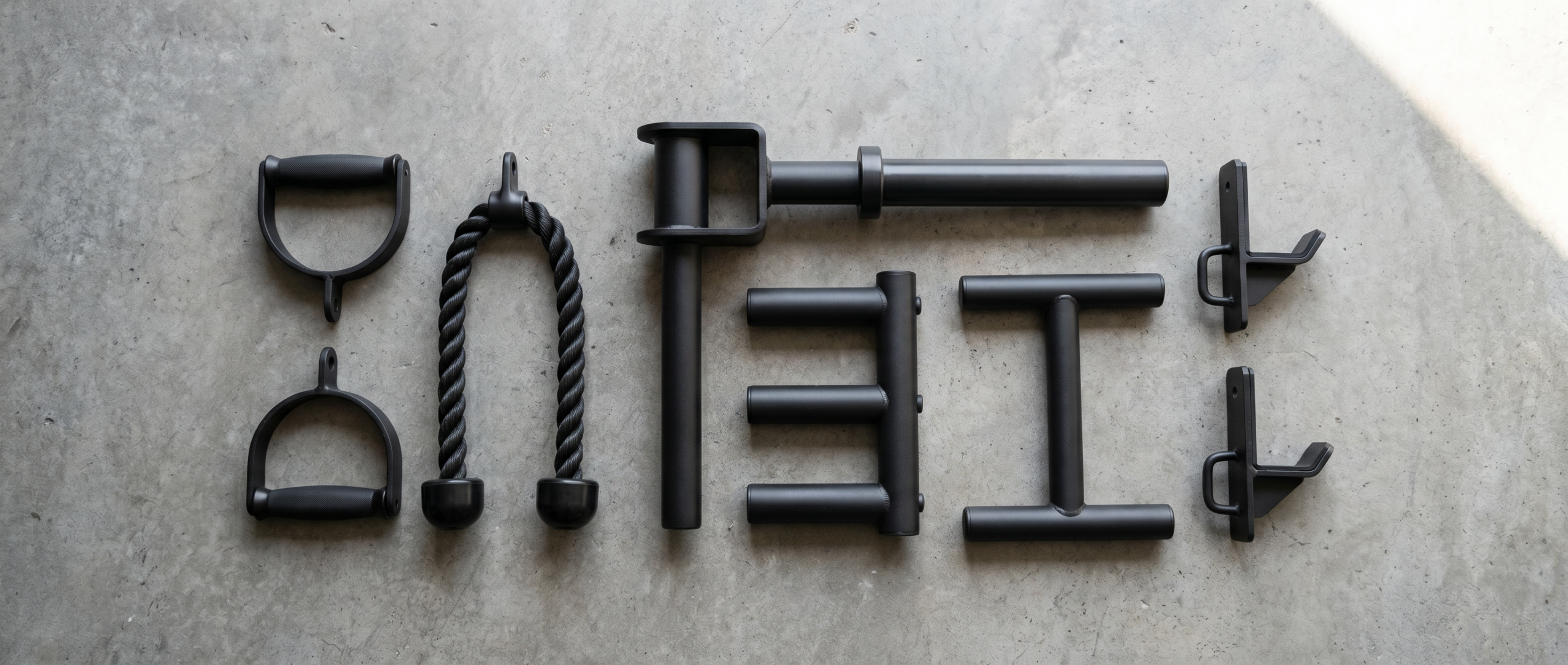
The term “modular” in commercial fitness equipment describes systems designed around interchangeable, connectable, and reconfigurable components rather than fixed, single-purpose units. A modular power rack, for instance, is not simply a rack with accessory hooks — it is a structural system built on standardized connection points that allow additional bays, cable stations, storage arms, pull-up attachments, suspension anchor points, and landmine fixtures to be added, relocated, or removed without replacing the core structure.
This is architecturally different from traditional gym equipment in a way that matters operationally. A conventional leg press machine does one thing. A conventional lat pulldown does one other thing. Each occupies floor space permanently, and changing what either does requires replacing it. A modular rack or rig system configured for barbell squatting can be reconfigured in hours to add cable functionality, convert a bay to a pull-up station, or extend the rig to accommodate additional users — all within the existing structural footprint.
As Gym Gear’s commercial modular rig documentation describes the category: modular rigs are designed to “configure the layout around your space rather than forcing your space to fit the equipment,” and can be “expanded or adapted as your training offering evolves” — making them a long-term investment rather than a fixed solution.
Why the Modular Trend Is Accelerating
Three converging forces have accelerated commercial adoption of modular equipment over the past three to five years, and none of them are slowing.
The Functional Training Revolution Has Outgrown Fixed Infrastructure
Functional training — exercises that develop multi-joint, real-world movement patterns — has moved from a niche programming approach to the dominant training modality in progressive commercial facilities. As Repetition Fitness documents in its analysis of gym equipment trends for 2025, “instead of filling a gym floor with bulky single-use machines, more facilities are adopting multi-station rigs and modular platforms that combine cables, suspension systems, and bodyweight tools.” The training methods that members now demand require spatial flexibility, multi-directional cable access, and reconfigurable anchor points — precisely what modular systems provide and what fixed machines cannot.
Small group training compounds this effect. A modular rig system designed for simultaneous multi-user access allows a coach to run a group of eight members through a structured circuit in a footprint that would previously have accommodated two or three single-purpose machines. The coach can reconfigure station assignments between sessions without moving equipment — changing the training stimulus for repeat class attendees within the same physical infrastructure. This programming agility is a commercial advantage that fixed machine configurations simply cannot replicate.
Space Economics Are Becoming More Demanding
Commercial real estate costs continue to rise in urban markets globally. The pressure on gym operators to extract maximum revenue per square foot of leased space is more acute than at any previous point in the industry’s history. Modular equipment addresses this pressure directly: multi-station systems that consolidate five or six training functions into a single connected rig structure use floor space more efficiently than the equivalent number of standalone machines, while simultaneously creating a visually cohesive zone that signals programming sophistication to members.
For smaller commercial facilities — boutique studios, hotel gyms, corporate wellness centers — the space efficiency argument for modular systems is even more compelling. A compact modular power rack with integrated cable, pull-up, and storage functionality can deliver the training capacity of a much larger fixed equipment inventory in a footprint appropriate for spaces that could never accommodate a traditional big-box gym configuration.
Programming Lifecycles Are Shorter Than Equipment Lifecycles
The programming trends that gym operators design their floors around change on cycles of three to five years. The equipment those floors are built around has service lives of ten to fifteen years or more. When floor design is built around fixed, single-purpose equipment, every significant programming shift requires partial or complete capital replacement — a costly and disruptive cycle that modular systems are specifically designed to break. As EcoFit Solutions notes in its analysis of commercial gym design trends: “Training trends shift, and your programming will likely evolve over time… Choosing modular and expandable systems allows you to adapt without rebuilding your entire floor.”

The Business Case for Modular Investment
The shift from fixed to modular equipment represents a meaningful change in how facility operators should think about the return on their equipment capital. The calculation involves more dimensions than the upfront cost comparison suggests.
| Factor | Fixed Single-Purpose Equipment | Modular System |
|---|---|---|
| Initial capital cost | Lower per unit; higher total for equivalent function coverage | Higher per system; lower total for equivalent function coverage |
| Floor space required | High — each function requires dedicated footprint | Low — multiple functions consolidated within single structural frame |
| Revenue per square foot | Fixed — constrained by single-user, single-function limitation | Higher — multi-user simultaneous access, premium class programming |
| Programming adaptability | None — changing programming requires capital replacement | High — reconfigure stations without structural changes |
| Maintenance complexity | High — multiple mechanical systems, cable stacks, weight stacks | Lower — modular structure with fewer moving components per station |
| Response to member trend shifts | Capital-intensive — requires new equipment purchases | Low-cost — add accessories or reconfigure within existing system |
| Expansion capability | Requires additional units and footprint | Add bays or modules within existing structural system |
| Multi-location standardization | Complex — different facilities accumulate different inventories | Straightforward — same modular system scales consistently across locations |
Key Modular Equipment Categories for Commercial Gyms
Modular design principles now apply across multiple commercial equipment categories, though they are most developed and most commercially significant in the strength and functional training segments.
Modular Power Rack Systems
The modern commercial power rack has evolved from a standalone four-post structure into the central node of a modular strength infrastructure. Current commercial specifications include standardized connection points for bay extensions (allowing racks to be linked into multi-bay rig systems), integrated uprights engineered for cable pulley attachment, plate storage spigots, band pegs, pull-up bar crossmembers, dip bar brackets, landmine pivot points, and j-cup systems that accommodate both Olympic barbell training and specialty bar programming.
Rack systems designed on this modular architecture allow a facility to start with a single bay — fully functional as a standalone squat rack — and expand to a multi-bay rig with cable functionality, pull-up stations, and integrated storage as membership and programming demand grows. This phased investment model significantly reduces the capital commitment at initial setup without sacrificing the facility’s long-term infrastructure potential. Explore the full range of commercial power racks to understand the specification differences between fixed and modular-capable designs.
Functional Training Rigs
Functional training rigs take the modular principle further than power racks, building structured training environments that can span an entire wall or room. Wall-mounted and freestanding rig configurations support simultaneous multi-user training across stations that can be changed between sessions: squat bays, cable stations, suspension anchor points, pull-up bars, ring mounts, and landmine fixtures all attach to a shared structural frame. The same rig that runs a strength circuit in the morning can be reconfigured for a conditioning class in the afternoon without floor relocation of any equipment.
For boutique studios and facilities where programming differentiation is a competitive strategy, functional training rigs represent the physical infrastructure that makes programming diversity operationally feasible. Without modular rig architecture, running meaningfully different programming across multiple class sessions requires either duplicate fixed equipment (capital-intensive) or a floor that is reset between sessions (labor-intensive). A well-configured modular rig resolves both problems.
Modular Storage and Integration Systems
The modular principle extends to equipment storage, an area where traditional gym design often fails. Dumbbell racks, plate trees, kettlebell storage, and accessory storage are in many commercial facilities afterthoughts — freestanding units scattered across the floor that create visual clutter, navigation obstacles, and inventory management challenges. Modular storage systems integrated into the rack and rig infrastructure consolidate storage within the strength zone, keeping floor space between equipment areas clear and creating a coherent visual environment that signals operational competence to members. Learn more about how commercial strength equipment systems can be configured to integrate storage within the training zone architecture.
Evaluating Modular Systems: What Commercial Buyers Should Assess
The modular equipment category has expanded rapidly, and quality varies considerably between manufacturers. The following specifications and questions help buyers distinguish genuinely modular commercial systems from products that are labeled modular but offer limited real-world reconfigurability.
| Evaluation Criterion | What to Assess | Red Flags |
|---|---|---|
| Upright gauge and wall thickness | Minimum 11-gauge steel (3mm wall) for uprights that support additional bays and cable loads | 14-gauge or thinner uprights labeled as “commercial” without load data |
| Connection point standardization | Bolt patterns compatible across all system modules; attachments usable across multiple base configurations | Proprietary fittings that limit attachment options to a single manufacturer’s accessories |
| Cable pulley system | Sealed bearing pulleys rated for daily commercial use; replaceable cable and cable guides | Open bearing pulleys that require frequent lubrication; non-replaceable cables |
| Attachment ecosystem depth | Range of compatible attachments — how many distinct training modalities can the system support? | Limited attachment catalog that doesn’t grow with programming needs |
| Expansion compatibility | Can additional bays be added to an existing installation using current hardware? | Single-bay configurations that cannot be connected to form multi-bay rigs |
| Load rating per station | Published static and dynamic load ratings for each structural configuration | Unspecified “heavy duty” or “commercial grade” claims without published load data |
| Floor mounting requirements | Clear bolt-down specifications for the facility’s floor type; anchor kit availability | Manufacturer unable to specify structural anchoring requirements |
Practical Procurement Planning for Modular Systems
Procuring a modular system requires a different planning approach than buying fixed equipment. The phased investment potential of modular systems creates genuine strategic optionality — but only if the initial procurement is made with the full expansion roadmap in mind.
Start with the endpoint, purchase the starting point. Before specifying how many bays or stations to purchase initially, define what the complete system will look like when your facility is fully mature. This determines which base system to buy — not all modular systems scale in the same direction or to the same ultimate capacity. Buying a starter configuration that is incompatible with the attachments or extensions you need in phase two creates avoidable rework costs.
Specify the attachment ecosystem before the structure. The commercial value of a modular rack system is largely determined by the depth of its compatible attachment ecosystem. A modular rack that supports only barbell squatting is not meaningfully more valuable than a fixed rack. A modular rack that supports barbell squatting, cable work, pull-up variations, dip training, suspension training, landmine exercises, and band resistance is an entirely different investment proposition. Evaluate the attachment catalog before committing to a structural system.
Plan floor zone integration, not just equipment units. Modular systems reach their full commercial value when the floor zone around them is designed for the traffic patterns and class formats they will support. This means planning entry and exit paths for simultaneous multi-user access, programming the surrounding floor for the accessory movements that complement the rig structure (medicine ball work, kettlebell circuits, sled push lanes), and ensuring that the cable anchor heights support the programming range intended.
Our engineering team can support custom modular rack configurations for commercial facilities of any scale. If you are designing a modular strength zone or functional training rig and need manufacturer-level specification support, contact Alex Athletics to discuss custom configurations and procurement options tailored to your facility layout and programming goals.

Frequently Asked Questions
What is the difference between a modular power rack and a standard power rack?
A standard power rack is a standalone four-post structure designed primarily for barbell training. A modular power rack is built on a structural system with standardized connection points that allow additional bays, cable stations, pull-up attachments, storage arms, and functional training accessories to be added and reconfigured. The distinction is architectural: a standard rack does what it does at purchase; a modular rack becomes the foundation of an expandable training infrastructure.
Is modular equipment more expensive than fixed single-purpose machines?
The upfront cost per unit may be comparable or higher for modular systems, but the total cost of delivering equivalent training functionality is generally lower. A multi-station modular rig that serves eight simultaneous users across six distinct exercise modalities typically costs less in total capital and less in floor space than the equivalent number of single-purpose machines. When the cost of programming adaptability (avoiding capital replacement when trends shift) is included, the ROI case for modular systems is stronger still.
How do I know if a modular rack system can be expanded after installation?
Ask the manufacturer to specify whether existing installations can accept new bay extensions using current hardware, or whether expansion requires new structural components. Request the connection point specification — compatible bolt pattern, upright dimensions, crossmember sizing — and verify that these specifications are consistent across all products in the manufacturer’s modular range. If these specifications are not readily available, expansion compatibility is likely limited.
What steel gauge is appropriate for commercial modular rack uprights?
A minimum of 11-gauge steel (approximately 3mm wall thickness) is the commercial baseline for rack uprights that will support additional bays, cable loads, and dynamic training loads from pull-up and dip movements. Heavier commercial applications — high-volume facilities where heavy powerlifting is programmed — benefit from 7-gauge uprights (approximately 4.5mm wall thickness). Uprights below 11 gauge are appropriate for home or light-duty settings, not genuine commercial deployment.
Can modular rigs support group fitness classes, or are they primarily for individual training?
Modular rigs are specifically well-suited to small group training classes, which is one of the primary drivers of their adoption in commercial settings. A four-bay modular rig can simultaneously host four pairs of members at different stations — cable rows, pull-ups, barbell squats, and landmine presses — under a single instructor’s supervision. This multi-user architecture is precisely what makes modular systems superior to fixed single-purpose equipment for group training revenue models.
Conclusion
The modular design trend in commercial fitness equipment is not a passing fashion. It reflects a durable shift in the business logic of gym floor design — driven by the rise of functional and small group training, increasing floor space economics pressure, the shortening of programming trend cycles relative to equipment service lives, and the demonstrated commercial advantages of systems that can grow and adapt alongside the facilities that house them.
For operators making equipment procurement decisions today, the practical implication is straightforward: fixed single-purpose machines should be specified only where their performance advantage over modular alternatives is clear and measurable. In the free weight and functional training zones that are increasingly the core of the commercial member experience, modular systems offer a stronger return on investment, a longer useful life, and a more defensible competitive position. If your facility is planning a new build, a renovation, or a phased equipment upgrade and you want to explore modular system configurations matched to your space and programming, contact Alex Athletics for a consultation on commercial strength and functional training equipment solutions.