Something is happening on the gym floor that every equipment buyer and facility operator needs to understand. Across commercial fitness facilities worldwide, members are voting with their feet — moving away from guided resistance machines and spending more time in the free weight zone. The shift is not a passing trend. It is a structural change in how people train, and the data to back it up has now reached a point of clarity that demands a direct response from gym operators.
The question is no longer whether free weight training demand is rising. The question is whether your facility’s equipment floor reflects that reality — and whether you are sourcing the right equipment to meet it. This article breaks down the behavioral data, explains the forces driving the shift, and translates those insights into practical procurement decisions for commercial gyms.
The Numbers Behind the Shift
The most comprehensive picture of member behavior in 2025 comes from the Health & Fitness Association (HFA) 2025 US Health & Fitness Consumer Report, which surveyed 18,000 US residents and analyzed data from 77 million fitness facility members. The findings are striking for any operator paying attention to equipment utilization.
In 2024, 32.1% of gym members trained with dumbbells or free weights, making free weights the second most used modality in commercial fitness facilities after treadmills (43.4%). More telling than the raw number, however, is the directional trend: resistance machine usage has declined from 31.4% of members in 2021 to 26.6% in 2024, while elliptical use fell from 23.2% to 18.8% in the same period. The divergence is clear. Cardio machines and guided resistance equipment are losing ground while free weights hold steady as a primary training tool.
These are not numbers from a single boutique-oriented city market. This is a nationwide survey of the broadest and most diverse cross-section of gym users in one of the world’s largest fitness markets — and the signal is consistent across demographics. If member behavior in the United States reflects broader global trends (and the parallel data from European and Asia-Pacific markets suggests it does), then facility operators everywhere are facing the same reality: the demand for quality free weight equipment is rising, and facilities that have underinvested in this category are at a competitive disadvantage.
Why Members Are Moving Toward Free Weights
The behavioral shift has multiple reinforcing causes. Understanding them helps operators anticipate how durable the trend is — and the evidence suggests it is structural rather than cyclical.
Functional Training Has Gone Mainstream
The fitness industry spent years positioning functional training as a specialty modality — the domain of athletes, coaches, and dedicated enthusiasts. That positioning no longer holds. Exercises that develop real-world movement patterns — deadlifts, squats, presses, rows — have migrated from elite programming into everyday gym use. Members who a decade ago might have gone straight to the leg press machine are now working through barbell squat progressions. The shift reflects a fundamental change in what members believe exercise should do for them.
Resistance machines are engineered for isolated, single-joint movements that constrain the body to a fixed plane of motion. Free weights do the opposite: they demand stabilization, coordination, and multi-joint recruitment. For members who have discovered functional training — whether through social media content, personal training, or structured programs — a well-stocked free weight area is not a supplementary feature of the gym. It is the reason they joined.
Sports Science Is Reaching the General Public
Research on the benefits of compound strength training has been building for decades, but it is now reaching general fitness consumers in ways it never did before. The evidence for the superiority of free weight compound movements in building both strength and lean mass is robust, and it is being communicated directly to gym members through content creators, certified coaches, and online training programs. According to the American College of Sports Medicine’s (ACSM) fitness trend report for 2026, resistance training and functional fitness programming remain among the most prominent trends across professional and recreational fitness contexts. Members are entering gyms better informed than ever before, and that information is pointing them toward free weights.
The Coaching Ecosystem Has Scaled Free Weight Training
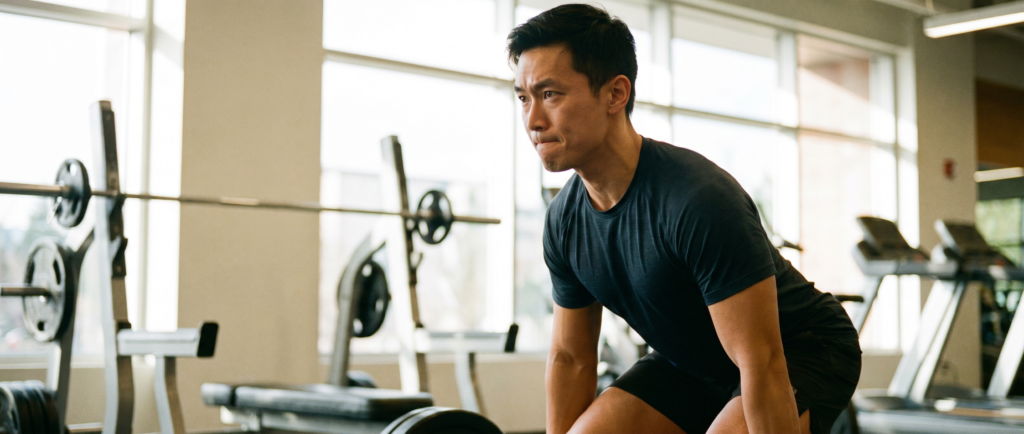
Personal training is at a historic high. The HFA’s 2025 consumer data shows that 22.6% of members worked with a personal trainer in 2024, and 32.3% participated in small-group training — both category records. Personal trainers and group fitness coaches overwhelmingly program around free weights. Dumbbells, barbells, kettlebells, and plates form the core toolkit of virtually every evidence-based coach working in a commercial gym environment. As coaching penetration rises, free weight utilization rises with it. The two trends are tightly linked.
Member Demographics Are Shifting Toward Strength Training
Demographic change is also a factor. Younger gym users — particularly those who entered fitness culture during and after the pandemic — arrived with strength training already normalized as a primary goal. Platforms that exploded during lockdown years exposed a generation of new gym-goers to powerlifting, Olympic lifting, and functional fitness programming before they ever set foot in a commercial facility. When they joined gyms, they came looking for barbells, racks, and heavy dumbbells — not guided machines.
At the same time, older members are discovering strength training through injury prevention and longevity-focused programming. Free weight resistance training for bone density, functional strength, and fall prevention is increasingly well-documented and physician-recommended, driving a secondary wave of demand from a segment that was historically more comfortable with resistance machines.
Machine-Based vs. Free Weight Training: What the Data Tells Gym Operators
The following comparison is not an argument that resistance machines should be eliminated from commercial gym floors. They remain useful for beginners, rehabilitation populations, and members who prefer guided movement. The point is to understand the relative direction of member demand and calibrate equipment investment accordingly.
| Catégorie | Guided Resistance Machines | Entraînement aux poids libres |
|---|---|---|
| Member usage trend (2021–2024) | Declining (31.4% → 26.6%) | Stable and high (32.1% in 2024) |
| Primary training population | Beginners, rehabilitation, older adults | Broad — recreational to advanced |
| Floor space per unit | High (fixed machine footprint) | Moderate to low (compact free weight zones) |
| Equipment lifespan in commercial use | 8–12 years with regular service | 15–20+ years (barbells, plates, dumbbells) |
| Capital cost per user capacity | High (machine serves one user at a time) | Moderate (barbells, dumbbells serve multiple users) |
| Maintenance complexity | Mechanical parts, cable systems, upholstery | Low (solid metal, rubber coating, minimal moving parts) |
| Social media content generation | Low (machines are background equipment) | High (barbells, dumbbells drive member content) |
| Coaching integration | Limited (machine-specific use) | High (central to PT and group training programs) |
What Rising Free Weight Demand Means for Equipment Procurement
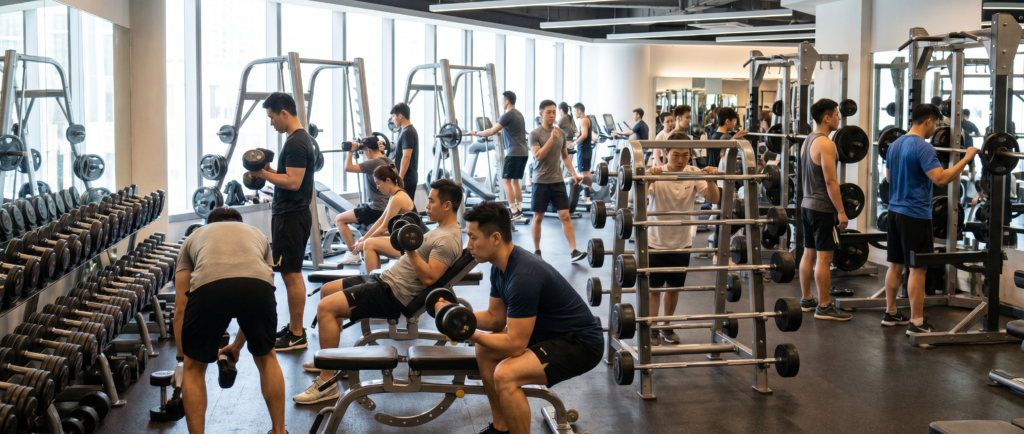
The behavioral shift has direct implications for how gym operators should be thinking about equipment investment. Rebalancing a facility floor from machine-heavy toward free weight-centered is not a small decision — it involves capital allocation, floor planning, member communication, and supplier relationships. Here is how the key decisions break down.
Prioritize Dumbbell Range Depth and Durability
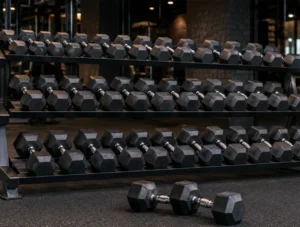
Dumbbells are the highest-contact free weight equipment in virtually every commercial gym. They are used by the widest cross-section of members, from beginners learning movement patterns to advanced athletes performing heavy compound work. The demand pressure on commercial dumbbells is considerable, and the equipment needs to hold up. Rubber hex dumbbells and polyurethane-coated dumbbells are the industry standard for commercial use because they protect both the equipment and the floor while offering a clean tactile grip even under heavy use. Explore the full range of haltères de qualité professionnelle to find the right specification for your facility’s membership profile.
Range completeness matters. A dumbbell set that runs from 2kg to 50kg in 2kg increments covers the vast majority of commercial gym programming requirements. Gaps in the range — or a set that stops at 30kg — create friction for members following structured strength programs and push them toward improvised workarounds that neither serve the training nor reflect well on the facility.
Barbell Stations Are the Anchor of the Free Weight Zone
If dumbbells are the most frequently touched equipment, barbells and power racks are the defining infrastructure of the free weight zone. A facility with a well-equipped barbell and rack setup communicates clearly to serious members that the gym understands how they train. Conversely, a gym with only two squat racks for a 1,000-member club creates wait times that drive member dissatisfaction and churn. When planning barbell stations, consider the ratio of members who follow strength-focused programming — and plan capacity accordingly. The full range of commercial Olympic barbells et power racks should be specified for load capacity, knurling pattern, whip profile, and finish durability in high-use commercial environments.
Weight Plates Need to Be Calibrated and Consistent
One of the most overlooked aspects of free weight zone procurement is plate quality. In high-volume commercial settings, members load and unload barbells dozens of times per session. Plates that are inconsistently weighted, difficult to grip, or prone to cracking under repeated drops create both training inaccuracies and safety risks. Calibrated competition-spec plates are the premium option for serious training environments, but for general commercial use, rubber bumper plates and iron plates with precision weight tolerance are the baseline. Review the full commercial weight plate range for specification and material options suited to different facility types.
Kettlebells Extend the Free Weight Zone’s Programming Range
Kettlebell training has crossed from specialty programming into the mainstream gym experience. They are now a standard tool in personal training, small group training, and functional fitness circuits. A commercial-grade kettlebell set that runs from 8kg to 48kg in the free weight zone significantly expands the programming options available to coaches and self-directed members alike, without requiring substantial additional floor space.
Evaluating Free Weight Equipment for Commercial Use: Key Specifications
Not all free weight equipment performs equally in commercial environments. High-use commercial gyms demand specifications that go beyond what is appropriate for home or light-duty settings. The table below outlines the key parameters gym operators and equipment buyers should evaluate when sourcing.
| Equipment | Critical Specification | Commercial Standard | What to Avoid |
|---|---|---|---|
| Rubber Hex Dumbbells | Rubber compound hardness, handle diameter | Solid cast iron head, vulcanized rubber, 28–32mm handle | Hollow fill, cracked rubber, painted-over iron |
| PU Dumbbells | PU density, seam integrity, knurling | High-density PU, seamless or fused joint, textured grip | Thin PU skin prone to peeling, slippery handle |
| Olympic Barbells | Tensile strength, sleeve rotation, knurling | 190,000+ PSI tensile, needle bearing sleeves, medium knurl | Bushing-only sleeves, low tensile steel, chrome flaking |
| Rubber Bumper Plates | Shore A hardness, diameter precision, bounce control | Shore A 85–90, 450mm diameter ±1mm, low dead bounce | Over-bounce on drops, diameter inconsistency between weights |
| Power Racks | Upright gauge, safety system, footprint | 11-gauge steel, dual-sided adjustable safeties, bolt-down capable | Thin gauge that flexes under load, limited j-cup adjustability |
| Kettlebells | Handle width, surface finish, base stability | Cast iron, smooth handle interior, flat base | Seam on handle interior, narrow base that tips easily |

The Business Case for Investing in Free Weight Infrastructure
The commercial argument for investing in a high-quality free weight zone goes beyond simply responding to member preferences. There is a measurable ROI case.
Free weight equipment has a significantly longer service life than guided resistance machines. A commercial-grade dumbbell set, properly maintained, can serve a facility for 15 to 20 years or more. Barbells and plates last even longer under normal commercial use. The initial capital outlay is offset by dramatically lower replacement costs compared to the cable systems, upholstery, and mechanical components that characterize guided machines.
Member retention is also affected. According to data from the HFA 2025 Global Fitness Industry Report, equipment quality is among the top factors members cite when explaining why they remain at a particular facility. A crowded, under-equipped free weight zone with wait times at every squat rack tells members that the gym does not understand how they train. A spacious, well-stocked free weight area communicates competence and investment in the member experience. In a market where 91% of global operators expect revenue growth in 2025, competitive differentiation through equipment quality is one of the most sustainable strategies available.
Coaching revenue is a third dimension. Personal trainers who work in well-equipped free weight zones deliver better programming, retain clients longer, and generate more revenue for the facility. A gym that invests in quality barbells, adjustable dumbbells, and a variety of plate options is investing in the quality of every training session its coaches deliver — and in the revenue those sessions represent.
Planning a Free Weight Zone Expansion: Practical Considerations
For operators looking to act on the demand shift, the practical planning considerations are as follows.
Floor allocation: Industry benchmarks suggest that a well-utilized free weight zone in a general-population commercial gym should account for 15–25% of usable floor space. Facilities where strength training is a core programming pillar may allocate significantly more. The key constraint is rack spacing — a minimum of 2.5 meters between adjacent rack stations is required for safe simultaneous use.
Weight range planning: Dumbbell sets should extend to at least 50kg for a facility serving recreational to intermediate members. Facilities with a serious powerlifting or strength coaching focus should extend to 60kg or beyond. Barbell loading capacity on primary squat racks should accommodate at least 300kg, accounting for plates loaded to both sides of a 20kg barbell.
Phased procurement: For facilities making the transition from machine-heavy to free weight-centered, phased procurement is often more practical than a single large capital event. Starting with a complete dumbbell range, a set of bumper plates, and three to four power racks provides the core infrastructure from which the free weight zone can grow as demand justifies further investment.
Surface protection: High-drop free weight training requires appropriate flooring. Rubber interlocking tiles with a minimum 15mm depth are the baseline under barbell stations. Thicker tiles (20–25mm) or dedicated lifting platforms are appropriate where Olympic lifting is programmed.
Questions fréquemment posées
How much of a commercial gym’s equipment budget should go toward free weights?
There is no universal ratio, but as a general benchmark for a general-population commercial gym targeting recreational to intermediate members, free weight equipment (dumbbells, barbells, plates, racks, kettlebells) should represent 30–45% of the equipment capital budget. Facilities with a strength training or performance focus may allocate 50% or more. The key driver is your membership profile and coaching programming — analyze what your members actually use and weight the budget accordingly.
How often does commercial dumbbell equipment need to be replaced?
Commercial-grade rubber hex or PU dumbbells in a high-use facility typically have a service life of 10–15 years or more when properly maintained. The main failure modes are rubber degradation (cracking or separating from the head) and handle surface wear. Conducting a quarterly inspection for rubber integrity and handle grip condition allows early identification of units that need replacement before they become safety risks.
What is the most important specification to check when sourcing commercial Olympic barbells?
Tensile strength is the most critical specification for commercial barbells. A minimum of 190,000 PSI tensile strength is the baseline for barbells that will see regular use with heavy loads in a commercial environment. Below this threshold, bars are susceptible to permanent bend under repeated loading. Sleeve rotation quality (needle bearings vs. bushings) is the second most important factor — needle bearing sleeves provide smoother rotation that protects wrists during Olympic lift patterns.
What is causing resistance machine usage to decline in commercial gyms?
Multiple factors are converging. The rise of functional training culture and evidence-based strength programming has shifted member preferences toward compound, multi-joint movements that require free weights rather than guided machines. Social media has accelerated this shift by exposing large audiences to barbell and dumbbell training through coaching content. Additionally, younger members who entered fitness culture during the pandemic years arrived already oriented toward strength training rather than machine-based workouts.
Is it still worth investing in guided resistance machines given declining usage trends?
Yes, but with calibration. Resistance machines remain valuable for beginner members who benefit from guided movement patterns, rehabilitation populations, and members who prefer lower-complexity training. The data indicates declining usage, not zero usage. The practical implication is not to eliminate machines but to rebalance the equipment floor toward free weights as the primary investment category, and to be selective about which machine categories to retain based on your facility’s actual utilization data.
Conclusion
The data is clear: free weight training demand in commercial gyms is not a niche trend — it is the defining direction of member behavior in 2025 and beyond. With 32.1% of gym members using dumbbells or free weights as their primary modality, and guided machine usage in steady decline, facility operators who have historically underinvested in their free weight zones face growing pressure to adapt. The member behavior shift is driven by durable forces: the mainstreaming of functional training, the rise of evidence-based coaching, demographic change, and the cultural influence of strength training communities. These are not forces that will reverse.
For equipment buyers and gym operators, the response is concrete. Invest in a complete, commercial-grade dumbbell range. Build or expand barbell and rack infrastructure. Source quality plates and kettlebells that hold up under daily commercial use. And work with manufacturers who understand the specification demands of commercial environments. If your facility is ready to upgrade its free weight infrastructure, contact Alex Athletics to discuss commercial equipment sourcing and specifications for your specific facility needs.