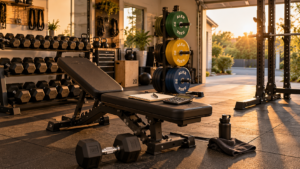
O haltere é o equipamento mais utilizado em qualquer ginásio comercial. Ao contrário das barras, que são carregadas numa estação e deixadas no local durante uma série, os halteres são pegados, transportados para a área de treino, utilizados em vários exercícios, pousados no chão e devolvidos ao suporte — dezenas de vezes por sessão, por centenas de sócios ao longo de uma semana. Esta intensidade de manuseamento torna o material da superfície dos halteres uma das escolhas de especificações com maior impacto operacional na aquisição de equipamento para ginásios comerciais e uma das que mais frequentemente é reduzida a uma discussão sobre o orçamento.
O ferro fundido, a borracha e o poliuretano TPU apresentam comportamentos diferentes neste padrão de utilização. As diferenças não se manifestam na primeira semana de funcionamento, mas sim no décimo oitavo mês — no cheiro da zona de pesos livres numa noite húmida, nas fissuras na superfície de uma bola de borracha de 20 kg, nos danos no pavimento causados por um conjunto de halteres cromados deixados cair à altura da anca. Este guia analisa os três materiais em relação às especificações que são relevantes em ambientes de ginásios comerciais.
As três categorias de materiais dos halteres
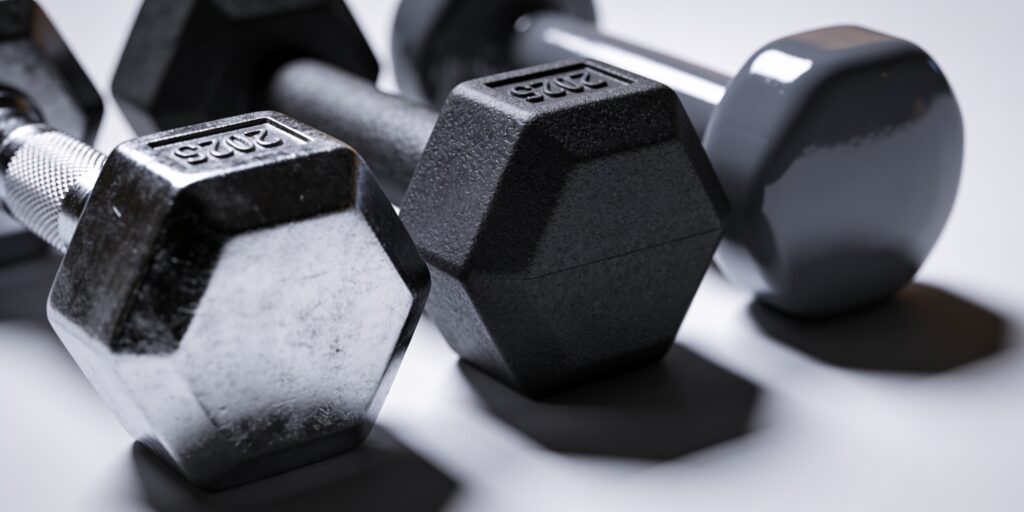
Halteres de ferro fundido / cromados são o formato original dos halteres comerciais. A cabeça do haltere é de ferro fundido maciço, podendo apresentar um acabamento pintado ou com revestimento em pó, ou ainda ser cromada com cromo decorativo ou duro. A Alex Athletics Haltere cromado apresenta a seguinte construção: uma superfície cromada polida sobre uma cabeça maciça de ferro fundido com um cabo cromado serrilhado. Os halteres cromados são a opção mais densa e compacta por quilograma de peso — uma vantagem fundamental para a eficiência no armazenamento e na colocação das mangas —, mas não proporcionam qualquer amortecimento entre o ferro e qualquer superfície com que entrem em contacto.
Halteres revestidos a borracha unir um revestimento de borracha vulcanizada a um núcleo de ferro fundido. A camada de borracha proporciona absorção de impactos quando o haltere é pousado, proteção do pavimento, redução de ruído e um punho ligeiramente mais macio para os praticantes que treinam com elevado contacto das mãos. O revestimento de borracha é o formato comercial predominante a nível global devido ao seu equilíbrio entre custo e adequação funcional para o público geral dos ginásios. A maioria das gamas comerciais de borracha é fornecida sob a forma de halteres hexagonais; se estiver a especificar esse formato, consulte Como escolher halteres hexagonais para um ginásio comercial.
Halteres de TPU / poliuretano utilizar uma sobremoldagem de poliuretano termoplástico sobre um núcleo de ferro fundido com um cabo de cromo duro. A Alex Athletics’ Haltere fixo TPU (W03AA007) representa esta categoria: cabeças em TPU com ligação química, disponíveis em pesos que variam entre 2,5 kg e 60 kg, com pegas em cromo duro em toda a gama. O TPU supera a borracha em termos de resistência à abrasão, estabilidade aos raios UV, composição química do odor e vivacidade da cor a longo prazo, com um custo unitário mais elevado que é compensado pela vida útil prolongada.
Halteres de ferro fundido e cromados: desempenho e limitações
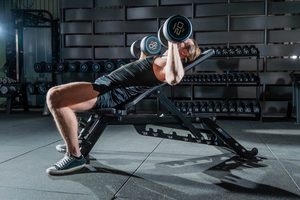
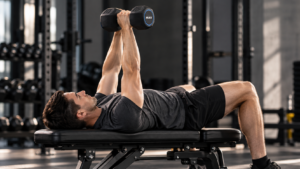
Os halteres cromados apresentam duas vantagens reais em termos de desempenho em ambientes comerciais: a compacticidade e a clareza visual. A ausência de um revestimento moldado significa que o perfil da cabeça é o mínimo possível para o peso em questão — um haltere cromado de 20 kg é significativamente mais pequeno do que um haltere de borracha de 20 kg com densidade equivalente. Em exercícios em que a cabeça do haltere entra em contacto ou se aproxima do corpo — pressões inclinadas, elevações laterais, agachamentos com haltere em taça —, este perfil reduzido melhora a amplitude de movimento e a mecânica do exercício. A superfície cromada polida também mantém a clareza visual: as marcações de peso permanecem claramente legíveis ao longo de toda a vida útil do produto.
As limitações operacionais concentram-se em duas áreas. Em primeiro lugar, o ruído e o impacto no pavimento: o ferro fundido sobre pavimentos de borracha produz um impacto metálico agudo quando o haltere é pousado com força. Em instalações com vários andares, ginásios na cave ou espaços com restrições acústicas, o ruído acumulado de um pavimento com halteres cromados durante as horas de ponta constitui um problema prático. Em segundo lugar, a integridade da superfície sob utilização comercial a longo prazo: o cromado decorativo — o padrão na maioria dos halteres cromados comerciais — é uma camada cosmética fina que lasca, descama e desenvolve ferrugem nos pontos lascados quando exposta a humidade prolongada. O cromo duro (o revestimento industrial utilizado nas especificações da Alex Athletics) é substancialmente mais durável, mas implica um custo adicional correspondente.
Halteres revestidos a borracha: o cavalo de batalha do setor comercial e os seus modos de falha
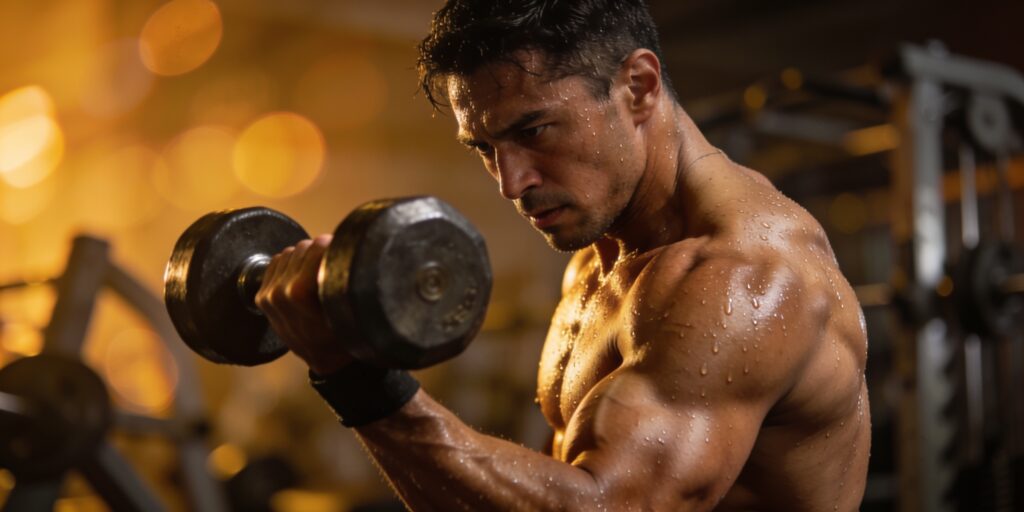
Os halteres revestidos a borracha tornaram-se o padrão comercial porque resolvem os problemas operacionais mais prementes da alternativa cromada: absorvem o impacto no chão, reduzem o ruído, protegem a superfície do pavimento e proporcionam uma experiência de manuseamento confortável para os utilizadores com técnicas variáveis. Para a maioria dos frequentadores de ginásios comerciais que treinam com intensidades de fitness gerais, os halteres revestidos a borracha são funcionalmente adequados e representam o melhor custo unitário em relação ao desempenho proporcionado. Na prática comercial, a maioria dos halteres revestidos a borracha é produzida no formato de cabeça hexagonal, em que a geometria antirrolamento e a montagem da cabeça à pega se tornam tão importantes quanto o próprio revestimento — abordamos esses critérios de seleção em pormenor no nosso Guia de compra de halteres hexagonais.
Os modos de falha dos halteres de borracha em ambientes comerciais estão bem documentados e são previsíveis. A borracha vulcanizada contém compostos de enxofre provenientes do processo de fabrico que se libertam em condições de calor e humidade — produzindo o cheiro característico das áreas de treino com pesos livres de grande afluência. Em estúdios boutique fechados, ginásios de hotéis e qualquer espaço com renovação de ar limitada, este odor acumula-se, tornando-se um problema persistente para os utilizadores que os sistemas de ventilação não conseguem resolver totalmente. O Associação de Saúde e Fitness (IHRSA) identifica a limpeza das instalações e a qualidade do ambiente, tal como percebidas pelos sócios, como os principais fatores de retenção dos sócios — e o odor dos halteres de borracha é um fator direto e quantificável que contribui para uma avaliação negativa do ambiente.
A degradação da superfície segue um padrão previsível. Nos primeiros doze meses de utilização comercial diária, os halteres revestidos a borracha apresentam um desempenho consistente. Entre o segundo e o terceiro ano, a combinação da exposição aos raios UV, ao contacto com o ácido do suor, à exposição a produtos de limpeza e às quedas repetidas cria microfissuras na superfície que se aprofundam progressivamente. Entre o quarto e o quinto ano, a borracha apresenta fissuras visíveis, perde material da superfície e — nos casos em que a borracha não está perfeitamente colada ao núcleo — começa a descolar-se. Nesta fase, o haltere necessita de ser substituído, e não reparado.
Halteres de poliuretano TPU: O modelo Premium
O poliuretano termoplástico resolve os dois principais problemas da borracha — o odor e a degradação da superfície — graças a uma composição química do material fundamentalmente diferente. De acordo com Covestro, um dos principais fabricantes mundiais de TPU, o TPU combina a elasticidade semelhante à da borracha com uma maior resistência à abrasão, reciclabilidade total e a eliminação do processo químico de vulcanização responsável pelo odor da borracha. No contexto dos halteres comerciais, isto traduz-se num material de superfície que permanece inodoro ao longo de toda a sua vida útil, resiste à formação de fissuras superficiais sob exposição aos raios UV e a produtos químicos e mantém a vivacidade da cor sem o desbotamento que a borracha sofre após uma utilização comercial prolongada.
O Colégio Americano de Medicina Desportiva (ACSM) salienta nas suas diretrizes relativas às instalações que a qualidade do equipamento e as normas de manutenção afetam diretamente os resultados em matéria de segurança dos membros. As superfícies de borracha degradadas — com fissuras, delaminação ou perda de material — apresentam riscos tanto de higiene como de manuseamento em categorias de equipamento de elevado contacto. A resistência do TPU à degradação da superfície está diretamente relacionada com a ênfase dada pela ACSM à manutenção do equipamento em condições operacionais seguras ao longo de toda a sua vida útil.
O haltere fixo Alex Athletics em TPU alarga a vantagem do TPU à especificação da pega: cromo duro, que é o padrão de revestimento industrial, em vez do cromo decorativo. Isto é importante na prática porque a pega é a superfície de maior contacto no haltere — é segurada com pressão de preensão variável, exposta ao giz e ao suor em cada utilização e tem de resistir à corrosão num ambiente onde a humidade se mantém consistentemente acima da média. Uma pega em cromo duro numa cabeça em TPU resulta num haltere cujas duas superfícies de maior contacto são ambas concebidas para garantir durabilidade comercial a longo prazo.
Matriz de comparação de materiais
| Propriedade | Cromo / Ferro fundido | Revestido a borracha | TPU de poliuretano |
|---|---|---|---|
| Perfil olfativo | Minimalista — metálico, sem odor químico | Cheiro a enxofre — intensifica-se com o calor e a humidade | Inodoro — quimicamente inerte, sem libertação de gases |
| Impacto no chão/superfície | Elevado — contacto entre o ferro e o chão; sem amortecimento | Vantagem — a borracha absorve o impacto; proteção do pavimento | Bom — a elasticidade do TPU absorve o impacto |
| Nível de ruído | Mais alto — impacto violento de metal contra o chão | Moderado — a borracha amortece, mas não elimina | Baixa — amortecimento semelhante ao da borracha |
| Perfil da cabeça / compacticidade | O mais compacto — sem sobremoldagem | O mais volumoso — a borracha aumenta significativamente o diâmetro | Compacto — a densidade do TPU permite cabeças mais pequenas |
| Fissura/degradação superficial | Podem ocorrer lascas no cromo; ferrugem nos pontos das lascas | Fissuras e delaminação após 3 a 5 anos | Muito baixa — elevada resistência à abrasão |
| Vibração da cor ao longo do tempo | N/A — normalmente com acabamento cromado simples | Desbota ao fim de 2 a 4 anos de exposição aos raios UV e ao suor | Mantém a vivacidade — resistente aos raios UV e aos produtos químicos |
| Sensação ao segurar (pega) | Serrilhagem com cromo duro — precisa e profissional | Varia consoante as especificações do puxador; normalmente cromado ou pintado | Cromo duro — de qualidade industrial, resistente à corrosão |
| Intervalo de peso | Normalmente, 1–50 kg | 1–60 kg, dependendo da gama | 2,5–60 kg (gama da Alex Athletics) |
| Custo unitário | Baixa a média | Médio — gama de preços comercial estabelecida | O mais alto nível — materiais e fabrico de primeira qualidade |
| Vida útil estimada (uso comercial intensivo) | 8–15 anos (cromo duro); 3–6 anos (decorativo) | 3 a 7 anos antes de se verificar uma degradação visível | 10–20+ anos — degradação mínima da superfície |
A especificação do cabo: o que a maioria das comparações de materiais ignora
A maioria das discussões sobre os materiais dos halteres centra-se exclusivamente no revestimento da cabeça e ignora o cabo — a superfície com a qual todos os utilizadores entram em contacto, em cada série, todos os dias. Na prática, as especificações do cabo são tão importantes do ponto de vista operacional quanto o material da cabeça, e ambos devem ser avaliados em conjunto.
Uma cabeça em TPU com um cabo pintado ou zincado constitui uma incompatibilidade de especificações: a cabeça terá uma durabilidade superior à resistência à corrosão do cabo por vários anos, o que obriga à substituição total do haltere mais cedo do que a superfície da cabeça exigiria. Por outro lado, uma pega de cromo duro numa cabeça revestida a borracha prolonga a vida útil da pega muito para além do prazo de degradação da borracha, altura em que o haltere precisa de ser substituído, independentemente do estado da pega.
A especificação mais coerente do ponto de vista comercial associa diretamente o acabamento da pega à vida útil prevista do material da cabeça. O haltere fixo em TPU da Alex Athletics utiliza cromo duro em ambas as superfícies — uma combinação de nível industrial concebida para garantir uma vida útil equivalente em toda a estrutura do haltere. Esta especificação coerente é uma das diferenças entre os halteres concebidos para durabilidade comercial e aqueles concebidos principalmente com base num preço unitário competitivo.

Seleção de materiais em função do contexto da instalação
| Tipo de instalação | Material recomendado para halteres | Motivo principal |
|---|---|---|
| Ginásio comercial de luxo / clube emblemático | Poliuretano TPU | Sem odor; longa durabilidade da superfície; indicador de experiência premium para os membros |
| Estúdio boutique / espaço fechado para treino físico | Poliuretano TPU | A ventilação insuficiente intensifica o cheiro a borracha; a qualidade do serviço prestado ao cliente é fundamental |
| Ginásio de hotel / setor hoteleiro | TPU ou borracha de alta qualidade | Sensibilidade dos hóspedes; baixa manutenção; ambiente fechado |
| Ginásio comercial de gama média | Revestido a borracha para uso comercial | Durabilidade adequada; relação custo-desempenho comprovada; substituível em ciclos de 5 a 7 anos |
| Powerlifting / ginásio especializado em treino de força | Cromo / ferro fundido (cromo duro) | Perfil compacto para prensagem; peso razoável; ambiente acústico aceitável |
| Residência para idosos / centro de reabilitação | TPU ou borracha de alta qualidade (gama leve) | Sem odor; proteção do pavimento; codificação por cores para identificação do peso |
| Ginásio comercial económico | Revestido a borracha (qualidade padrão) | Investimento inicial mais baixo; prever a substituição no prazo de 5 anos, em caso de utilização intensiva |
Perguntas mais frequentes
Qual é a diferença prática entre halteres de borracha e de TPU na utilização comercial do dia-a-dia?
A diferença mais imediatamente percetível é o odor — os halteres de borracha produzem um cheiro característico a enxofre que se intensifica com o calor e a humidade, enquanto os halteres de TPU são completamente inodoros. A segunda diferença surge com o tempo: as superfícies de borracha começam a rachar e a degradar-se visualmente no prazo de três a cinco anos, em condições de utilização comercial intensiva, enquanto o TPU mantém a integridade da superfície durante um período significativamente mais longo. Para a maioria dos utilizadores, a primeira diferença é percetível logo no primeiro dia; a segunda torna-se evidente no segundo ou terceiro ano de utilização.
Os halteres cromados são adequados para um ginásio comercial geral?
Os halteres cromados são adequados para ginásios comerciais, onde o seu perfil compacto e a sua clareza visual são valorizados do ponto de vista operacional — especialmente em instalações focadas na força, onde a amplitude de movimento em exercícios de pressão com pesos elevados beneficia de um diâmetro menor da cabeça. As principais limitações são o ruído (o contacto do ferro com o chão é mais ruidoso do que as alternativas em borracha ou TPU) e a durabilidade do acabamento cromado: o cromo duro é adequado para uso comercial, mas o cromo decorativo lasca-se e desenvolve corrosão nos pontos danificados no prazo de dois a quatro anos de utilização comercial intensiva.
Por que razão os halteres de poliuretano são mais caros e será que esse preço mais elevado se justifica do ponto de vista comercial?
Os halteres de poliuretano TPU são mais caros na aquisição, uma vez que o material e o processo de fabrico são mais onerosos do que a vulcanização da borracha. A justificação comercial reside na vida útil: em condições de utilização comercial intensiva, as superfícies em TPU têm uma duração estimada de 10 a 20 anos ou mais, contra os três a sete anos da borracha. Numa perspetiva de dez anos para as instalações, o número de substituições de conjuntos de halteres necessárias — e o impacto financeiro e operacional que essas substituições acarretam — é significativamente menor com o TPU. Para instalações com um horizonte de investimento a longo prazo e que se posicionam como oferecendo uma experiência premium aos sócios, o custo adicional do TPU é normalmente justificado já no terceiro ou quarto ano de funcionamento.
É possível misturar halteres de borracha e de TPU no mesmo suporte de um ginásio comercial?
Sim — a mistura de materiais é comum em instalações comerciais com aquisições em várias fases ou programas de modernização transitórios. A consideração prática é que os dois tipos de material envelhecem de forma diferente: os halteres de borracha do mesmo conjunto apresentarão uma degradação superficial visível antes dos halteres de TPU com a mesma idade, criando uma inconsistência visual no suporte à medida que a instalação envelhece. Para instalações em que a coerência estética é importante para a experiência dos sócios, é preferível uma especificação de material consistente em toda a gama de halteres — ou um plano deliberado de substituição faseada — a um conjunto indefinido de materiais misturados.
Qual é a gama de pesos disponível nos halteres comerciais de TPU?
A gama de halteres fixos em TPU da Alex Athletics vai dos 2,5 kg aos 60 kg, em incrementos comerciais padrão. O limite máximo de 60 kg é significativo — a maioria das gamas de halteres de borracha fica-se pelos 50 kg, limitando as opções de exercícios de pressão e remo com pesos elevados para os sócios avançados de ginásios comerciais. A especificação consistente do TPU em toda a gama de pesos garante que os halteres mais leves e os mais pesados do conjunto partilhem a mesma qualidade de superfície, o mesmo perfil de odor e os mesmos requisitos de manutenção, eliminando a inconsistência de material que surge quando as instalações complementam os halteres de borracha de peso elevado com um produto diferente de outro fabricante.
Conclusão
O material da superfície dos halteres não é uma especificação secundária — é o principal fator determinante do odor na área de pesos livres, do tempo durante o qual o equipamento se mantém em condições profissionais, do ruído que gera e da forma como transmite a qualidade das instalações aos sócios que o manuseiam dezenas de vezes por sessão. Os halteres cromados são adequados para contextos específicos de treino de força. Os halteres revestidos a borracha continuam a ser adequados para aquisições comerciais em que o custo é um fator determinante e se prevêem ciclos de substituição de cinco a sete anos. O poliuretano TPU é a opção premium comercialmente justificada para instalações em que a experiência dos sócios, a longa vida útil e a ausência total de odor são prioridades operacionais.
Para ver a gama completa da Alex Athletics gama de halteres para uso comercial ou discutir as especificações relativas aos halteres de chão para as suas instalações, contacte a nossa equipa.