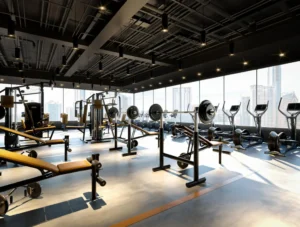
The dumbbell is the most handled piece of equipment in any commercial gym. Unlike barbells, which are loaded at a station and left in place for a set, dumbbells are picked up, moved to a training area, used across multiple exercises, set down on the floor, and returned to the rack — dozens of times per session, by hundreds of members over the course of a week. This handling intensity makes dumbbell surface material one of the most operationally consequential specification choices in commercial gym procurement, and one of the most frequently reduced to a budget conversation.
Cast iron, rubber, and TPU polyurethane each perform differently under this pattern of use. The differences show up not in the first week of operation but in month eighteen — in the smell of the free weight area on a humid evening, in the cracking on the surface of a 20 kg rubber head, in the floor damage under a set of chrome dumbbells dropped from hip height. This guide examines all three materials across the specifications that matter in commercial gym environments.
The Three Dumbbell Material Categories
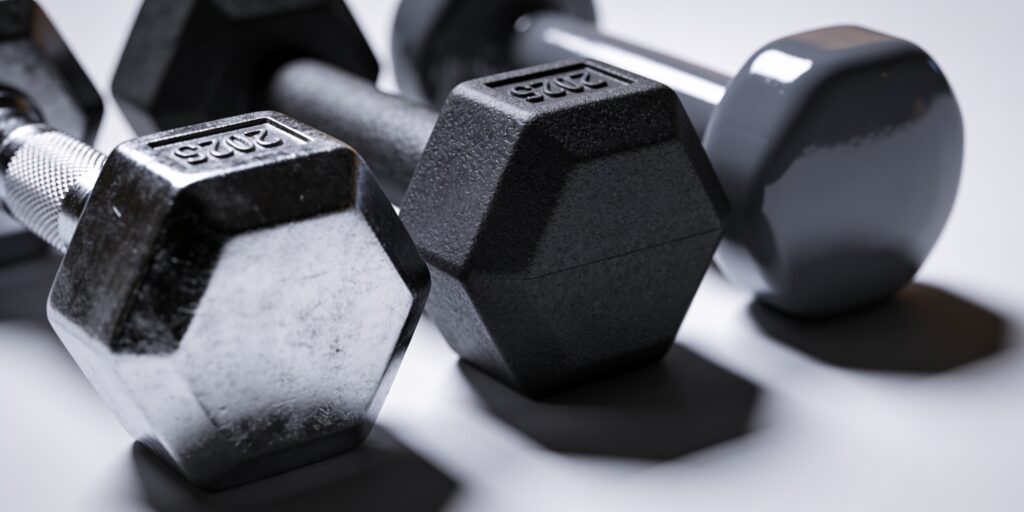
Cast iron / chrome dumbbells are the original commercial dumbbell format. The dumbbell head is solid cast iron, either left with a painted or powder-coated finish or plated with decorative or hard chrome. The Alex Athletics Haltères chromés follows this construction: a polished chrome surface on a solid cast iron head with a knurled chrome handle. Chrome dumbbells are the densest and most compact option per kilogram of weight — a key advantage for storage efficiency and sleeve loading — but provide no cushioning between the iron and any surface they contact.
Rubber-coated dumbbells bond a vulcanised rubber overmould to a cast iron core. The rubber layer provides impact absorption when the dumbbell is set down, floor protection, noise reduction, and a slightly softer handle for members who train with high hand contact volume. Rubber coating is the dominant commercial format globally due to its balance of cost and functional adequacy for general gym populations.
TPU / polyurethane dumbbells use a Thermoplastic Polyurethane overmould on a cast iron core with a hard chrome handle. Alex Athletics’ Haltères fixes en TPU (W03AA007) represents this category: chemically bonded TPU heads available from 2.5 kg to 60 kg, with hard chrome handles across the full range. TPU outperforms rubber in abrasion resistance, UV stability, odour chemistry, and long-term colour vibrancy at a higher unit cost that is recoverable through extended service life.
Cast Iron and Chrome Dumbbells: Performance and Limitations
Chrome dumbbells have two genuine performance advantages in commercial settings: compactness and visual clarity. The absence of an overmould means the head profile is the minimum possible for the given weight — a 20 kg chrome dumbbell is meaningfully smaller than a 20 kg rubber dumbbell at equivalent density. For exercises where the dumbbell head contacts or approaches the body — incline presses, lateral raises, goblet squats — this reduced profile improves range of motion and exercise mechanics. The polished chrome surface also maintains visual clarity: weight markings remain clearly legible throughout the product’s service life.
The operational limitations are concentrated in two areas. First, noise and floor impact: cast iron on rubber flooring produces a sharp metallic impact when the dumbbell is placed down hard. In multi-storey facilities, basement gyms, or spaces with acoustic constraints, the cumulative noise of a chrome dumbbell floor during peak hours is a practical problem. Second, surface integrity under long-term commercial use: decorative chrome plating — the standard on most commercial chrome dumbbells — is a thin cosmetic layer that chips, flakes, and develops rust at chipped points under sustained humid exposure. Hard chrome (the industrial plating used in Alex Athletics’ specification) is substantially more durable but carries a corresponding cost premium.
Rubber-Coated Dumbbells: The Commercial Workhorse and Its Failure Modes
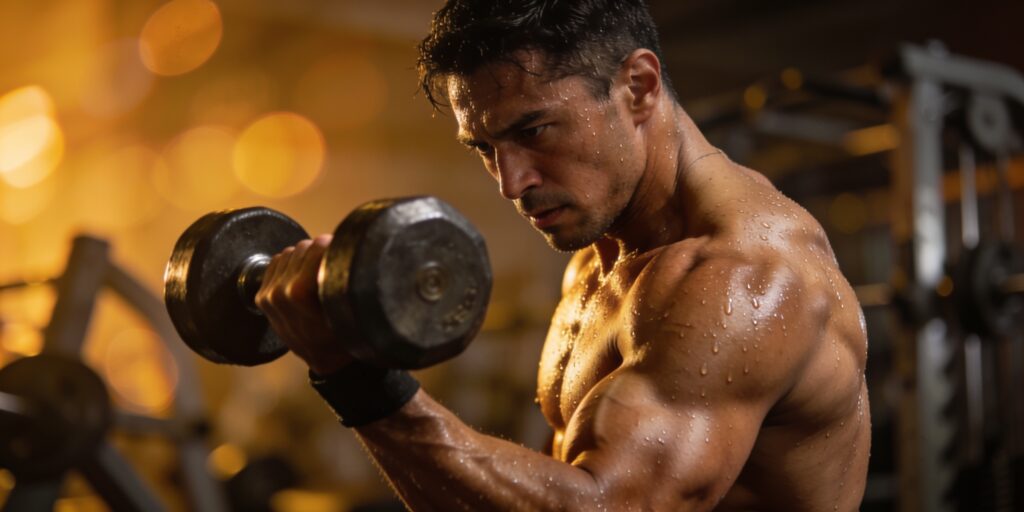
Rubber-coated dumbbells became the commercial standard because they solve the most pressing operational problems of the chrome alternative: they absorb floor impact, reduce noise, protect the floor surface, and provide a forgiving handle experience for members with variable technique. For the majority of commercial gym populations training at general fitness intensities, rubber dumbbells are functionally adequate and represent the best unit cost for the performance delivered.
The failure modes of rubber dumbbells in commercial environments are well-documented and predictable. Vulcanised rubber contains sulphur compounds from the manufacturing process that off-gas in warm and humid conditions — producing the characteristic smell of high-volume free weight areas. In enclosed boutique studios, hotel gyms, and any space with limited air exchange, this odour accumulates into a persistent member experience issue that ventilation systems cannot fully address. The Association pour la santé et le fitness (IHRSA) identifies member-perceived facility cleanliness and environment quality as primary drivers of membership retention — and rubber dumbbell odour is a direct and quantifiable contributor to negative environmental assessment.
Surface degradation follows a predictable arc. In the first twelve months under commercial daily use, rubber-coated dumbbells perform consistently. By years two to three, the combination of UV exposure, sweat acid contact, cleaning agent exposure, and repeated dropping creates surface micro-cracks that progressively deepen. By years four to five, the rubber is visibly cracking, losing surface material, and — in cases where the rubber is bonded imperfectly to the core — beginning to delaminate. At this stage the dumbbell requires replacement, not repair.
TPU Polyurethane Dumbbells: The Premium Case
Thermoplastic Polyurethane addresses the two primary failure modes of rubber — odour and surface degradation — through a fundamentally different material chemistry. According to Covestro, one of the world’s leading TPU manufacturers, TPU combines rubber-like elasticity with higher abrasion resistance, complete recyclability, and elimination of the vulcanisation chemistry responsible for rubber’s odour. In the context of commercial dumbbells, this translates to a surface material that remains odourless throughout its service life, resists surface cracking under UV and chemical exposure, and maintains colour vibrancy without the fading that rubber experiences after sustained commercial use.
Le Collège américain de médecine du sport (ACSM) notes in its facility guidelines that equipment quality and maintenance standards directly affect member safety outcomes. Degraded rubber surfaces — cracking, delaminating, or shedding material — present both hygiene and handling risks in high-contact equipment categories. TPU’s resistance to surface degradation is directly relevant to the ACSM’s emphasis on maintaining equipment in safe operational condition throughout its service life.
The Alex Athletics TPU Fixed Dumbbell extends the TPU advantage to the handle specification: hard chrome, which is the industrial plating standard rather than decorative chrome. This matters in practice because the handle is the highest-contact surface on the dumbbell — it is gripped with varying grip pressure, exposed to chalk and sweat with every use, and must resist corrosion in an environment where humidity is consistently above average. A hard chrome handle on a TPU head creates a dumbbell whose two highest-contact surfaces are both specified for long-term commercial durability.
Material Comparison Matrix
| Propriété | Chrome / Cast Iron | Rubber-Coated | TPU Polyurethane |
|---|---|---|---|
| Profil olfactif | Minimal — metallic, no chemical odour | Odeur de soufre — s'intensifie sous l'effet de la chaleur et de l'humidité | Inodore — chimiquement inerte, ne dégage aucun gaz |
| Floor / surface impact | High — iron-on-floor contact; no cushioning | Good — rubber absorbs impact; floor protection | Avantage — L'élasticité du TPU amortit les chocs |
| Noise level | Highest — sharp metal-on-floor impact | Moderate — rubber dampens but doesn’t eliminate | Low — similar dampening to rubber |
| Head profile / compactness | Most compact — no overmould | Bulkiest — rubber adds significant diameter | Compact — TPU density allows smaller heads |
| Surface crack/degradation | Chrome chips possible; rust at chip points | Cracking and delamination after 3–5 years | Very low — high abrasion resistance |
| Colour vibrancy over time | N/A — typically single chrome finish | Fades within 2–4 years of UV and sweat exposure | Maintains vibrancy — UV and chemical resistant |
| Grip feel (handle) | Hard chrome knurling — precise, professional | Varies by handle spec; typically chrome or painted | Hard chrome — industrial grade, corrosion resistant |
| Weight range | Typically 1–50 kg | 1–60 kg depending on range | 2.5–60 kg (Alex Athletics range) |
| Unit cost | Faible à moyen | Medium — established commercial price point | Highest — premium material and manufacturing |
| Estimated service life (heavy commercial) | 8–15 years (hard chrome); 3–6 years (decorative) | 3–7 years before visible degradation | 10–20+ years — minimal surface degradation |
The Handle Specification: What Most Material Comparisons Overlook
Most dumbbell material discussions focus entirely on the head coating and ignore the handle — the surface that every user contacts, every set, every day. In practice, the handle specification is as operationally important as the head material, and the two should be evaluated together.
A TPU head with a painted or zinc-plated handle is a specification mismatch: the head will outlast the handle’s corrosion resistance by years, requiring earlier full dumbbell replacement than the head surface would otherwise dictate. Conversely, a hard chrome handle on a rubber-coated head extends the handle’s service life well beyond the rubber’s degradation timeline, at which point the dumbbell needs replacement regardless of the handle’s condition.
The most commercially coherent specification pairs the handle finish directly with the head material’s expected service life. Alex Athletics’ TPU Fixed Dumbbell uses hard chrome on both surfaces — an industrial-grade pairing designed for equivalent service life across the dumbbell’s complete structure. This coherent specification is one of the distinctions between dumbbells designed for commercial durability and those designed primarily around competitive unit pricing.
Material Selection by Facility Context
| Type d'établissement | Recommended Dumbbell Material | Key Reason |
|---|---|---|
| Salle de sport haut de gamme / club phare | TPU polyurethane | No odour; long surface life; premium member experience signal |
| Boutique studio / enclosed PT space | TPU polyurethane | Limited ventilation amplifies rubber odour; client-facing quality matters |
| Salle de sport d'hôtel / d'établissement hôtelier | TPU or high-grade rubber | Guest sensitivity; low maintenance; enclosed environment |
| Salle de sport commerciale de taille moyenne | Commercial rubber-coated | Adequate durability; established cost-performance; replaceable in 5–7 year cycles |
| Powerlifting / strength focused gym | Chrome / cast iron (hard chrome) | Compact profile for pressing; weight clarity; acoustic environment acceptable |
| Senior / rehabilitation facility | TPU or high-grade rubber (light range) | No odour; floor protection; colour coding for weight identification |
| Budget commercial gym | Revêtement en caoutchouc (qualité standard) | Lowest initial outlay; plan for replacement within 5 years under heavy use |
Questions fréquemment posées
What is the practical difference between rubber and TPU dumbbells in day-to-day commercial use?
The most immediately noticed difference is odour — rubber dumbbells produce a characteristic sulphur smell that intensifies with heat and humidity, while TPU dumbbells are completely odourless. The second difference emerges over time: rubber surfaces begin to crack and visually degrade within three to five years under heavy commercial use, while TPU maintains surface integrity significantly longer. For most members, the first difference is perceptible on day one; the second becomes apparent in year two or three of operation.
Are chrome dumbbells appropriate for a general commercial gym?
Chrome dumbbells are appropriate in commercial gyms where their compact profile and visual clarity are operationally valued — particularly in strength-focused facilities where heavy pressing range of motion benefits from a smaller head diameter. The primary limitations are noise (iron-on-floor contact is louder than rubber or TPU alternatives) and the durability of the chrome finish: hard chrome is appropriate for commercial use, but decorative chrome chips and develops corrosion at damaged points within two to four years of heavy commercial handling.
Why are polyurethane dumbbells more expensive, and is the premium justified commercially?
TPU polyurethane dumbbells are more expensive at purchase because the material and manufacturing process are more costly than rubber vulcanisation. The commercial justification comes from service life: under heavy commercial use, TPU surfaces last an estimated 10–20+ years versus three to seven years for rubber. Across a ten-year facility horizon, the number of dumbbell set replacements required — and the capital and operational disruption those replacements create — is materially lower with TPU. For facilities with a long investment horizon and premium member experience positioning, the TPU premium is typically justified by the third or fourth year of operation.
Can rubber and TPU dumbbells be mixed on the same commercial gym rack?
Yes — mixing materials is common in commercial facilities with multi-phase procurement or transitional upgrade programmes. The practical consideration is that the two material types age differently: rubber dumbbells in the same set will show visible surface degradation before TPU dumbbells of the same age, creating visual inconsistency on the rack as the facility ages. For facilities where aesthetic coherence matters to member experience, a consistent material specification across the full dumbbell range — or a deliberate phased replacement plan — is preferable to an indefinite mixed-material floor.
What weight range is available in TPU commercial dumbbells?
Alex Athletics’ TPU Fixed Dumbbell range runs from 2.5 kg to 60 kg in standard commercial increments. The 60 kg upper limit is meaningful — most rubber dumbbell ranges stop at 50 kg, limiting heavy pressing and rowing options for advanced commercial gym members. The consistent TPU specification across the full weight range ensures that the lightest and heaviest dumbbells in the set share the same surface quality, odour profile, and maintenance requirements, eliminating the material inconsistency that arises when facilities supplement heavy-end rubber dumbbells with a different product from a different manufacturer.
Conclusion
Dumbbell surface material is not a secondary specification — it is the primary determinant of how the free weight area smells, how long the equipment remains in professional condition, how much noise it generates, and how it signals facility quality to members who handle it dozens of times per session. Chrome dumbbells serve specific strength training contexts well. Rubber-coated dumbbells remain adequate for cost-sensitive commercial procurement where five to seven year replacement cycles are planned. TPU polyurethane is the commercially justified premium for facilities where member experience, long service life, and zero odour are operational priorities.
To review Alex Athletics’ full commercial dumbbell range or discuss a dumbbell floor specification for your facility, contactez notre équipe.