Training Science

Evidence-based training knowledge for coaches and operators — programming, biomechanics, and the science behind strength, hypertrophy, and functional fitness.

Cover contrasting a warehouse worker lifting boxes with the same person performing a controlled physical therapy exercise.

Physical Therapy Exercises: Why Physical Labor Is Not Exercise — and the Five Components That Build Resilience

PT Exercises — Looking Beyond Physical Labor & Redefining its Components — By Dr. Jordan K., PT — the second article in his injury-prevention and recovery series for Alex Athletics. The first, on passive vs active physical therapy, explained why passive relief alone keeps pain coming back; this one defines what physical therapy exercises actually […]


Physical Therapy Exercises: Why Physical Labor Is Not Exercise — and the Five Components That Build Resilience Read More »

Split cover image contrasting passive physical therapy treatment with active resistance training rehabilitation.

Passive Relief through PT Modalities vs. Active Recovery through Exercises

Passive Relief through PT Modalities vs. Active Recovery through Exercises — By Dr. Jordan K., PT — the first article in an injury-prevention and recovery series written for Alex Athletics, opening with the passive vs active physical therapy question every rehab client eventually asks. Over decades of experience as a PT practitioner across various countries,

Passive Relief through PT Modalities vs. Active Recovery through Exercises Read More »

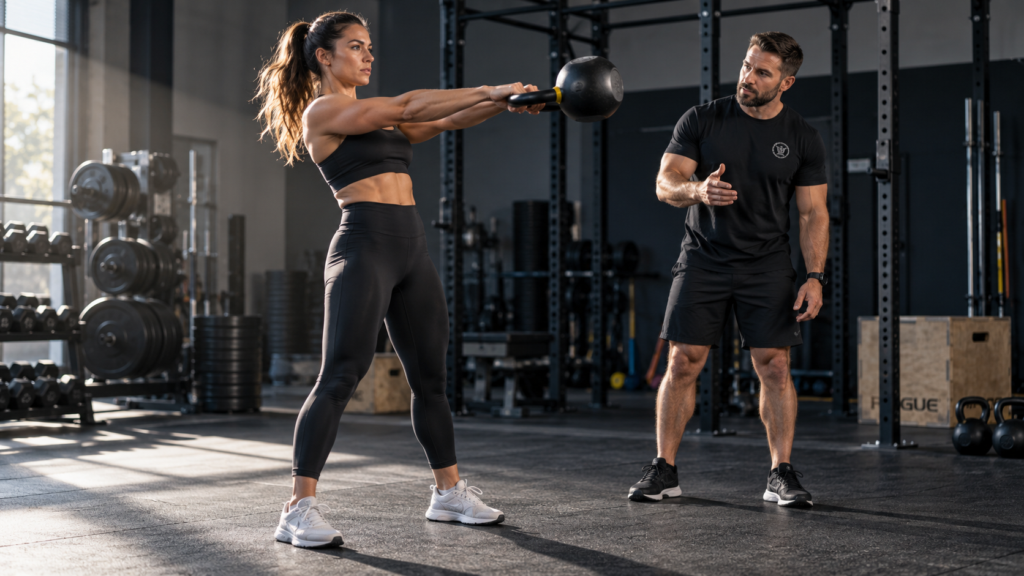
Coach teaching the kettlebell swing with the bell floating at the top of the movement

Kettlebell Training Fundamentals: Movements Every Coach Should Teach

Why Teaching Order Decides Whether the Kettlebell Builds Athletes or Injuries The kettlebell is simultaneously the most forgiving and least forgiving implement on the gym floor, and which face a client meets depends almost entirely on the order their coach teaches it. Forgiving, because its signature movements load the body in athletic, hip-dominant patterns at

Kettlebell Training Fundamentals: Movements Every Coach Should Teach Read More »